
Woodstock, GA · Serving North Metro Atlanta
Engineered Hardwood Flooring Installation in Woodstock & North Metro Atlanta
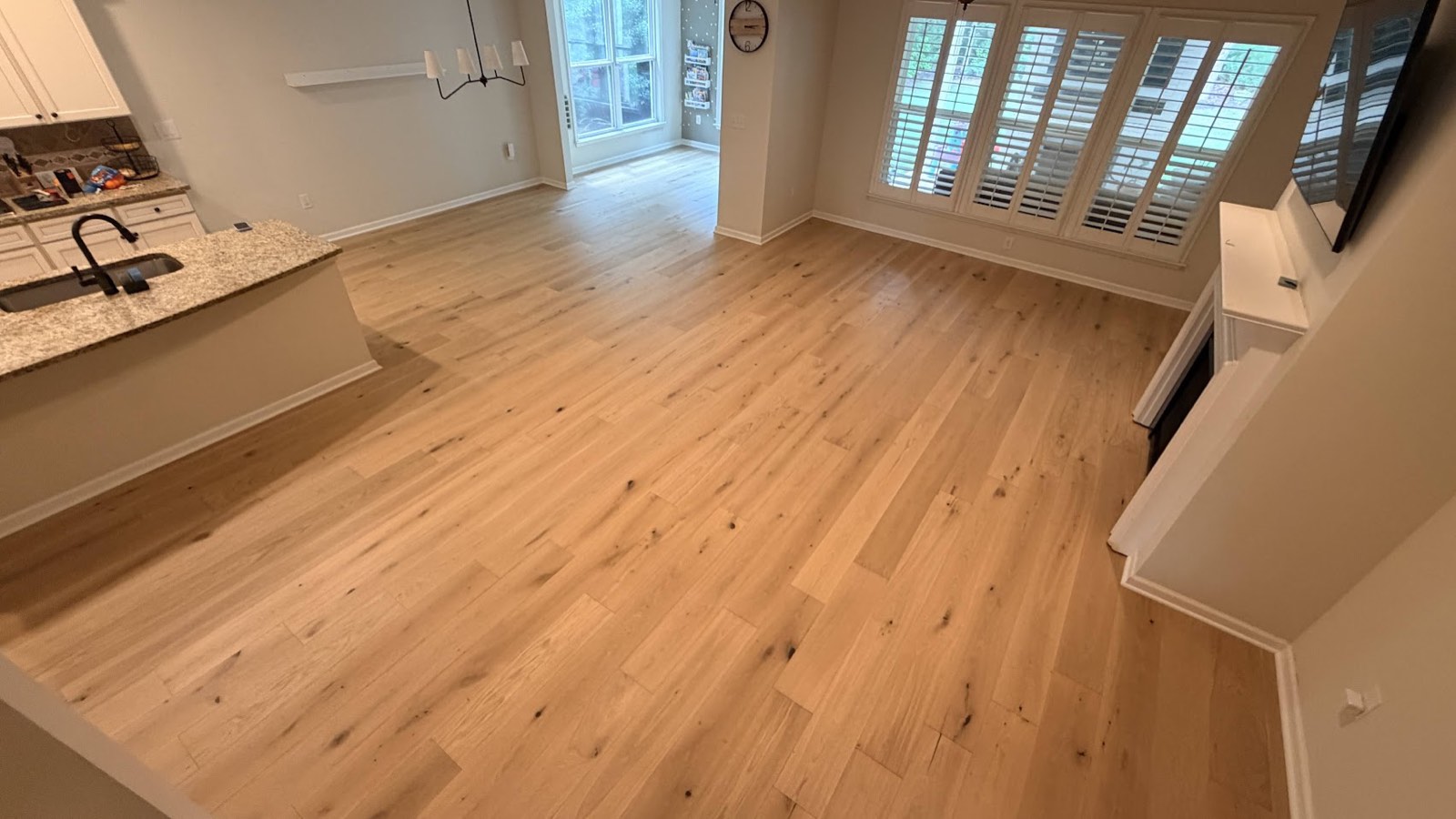
Unfinished wide-plank white oak and European French Oak, installed over wood or concrete and finished on site to match your home. Family-run in Woodstock, GA.
- 10,000 jobs completed in Georgia
- 25 Years of Experience
- Insured & Family Owned
- Warranty1-year warranty from completion
- FinancingUp to $100,000, subject to approval
- Response timeSame business day · scheduling 24/7
- Experience10,000 jobs completed in Georgia · 25 years of experience
- Family-runFamily-run, owned by David Brannan
What Engineered Hardwood Is
Engineered hardwood is real wood. The top layer, called the wear layer or veneer, is genuine hardwood such as white oak. It is bonded to a layered plywood or composite core. Solid hardwood is one piece of wood from top to bottom. Both give you a real wood surface. The difference is what sits underneath, and that decides where each one can go. We compare the two on our solid vs. engineered hardwood installation page.
The layered core is more stable than a solid board when humidity changes. That is why engineered planks can go over a concrete slab or other spots where solid hardwood generally can’t be installed directly.
Engineered planks are installed one of three ways. They can be nailed or stapled to a wood subfloor, glued down with adhesive, or floated, which means the planks connect to each other and rest on an underlayment without being attached to the subfloor. Over a slab, the choice is usually glue-down or floating. The manufacturer’s installation instructions decide which methods are allowed for a given product.
Can engineered hardwood be sanded and refinished? It depends on the wear layer, because that real wood is the only part a sander can touch. Thin, micro-veneer planks often can’t be sanded at all. At best they can be cleaned and recoated. A wear layer of 3mm or more, like the 4mm veneers on several of our projects below, can generally be sanded and refinished. It is usually fewer times than a 3/4-inch solid floor, and the number depends on how much wood each sanding removes. If you aren’t sure what you have, we can look at the floor during your estimate visit. A floor vent opening or a transition strip often shows the veneer in cross-section. Our hardwood floor refinishing page explains the process.
Unfinished Engineered Hardwood: Finished on Site
Unfinished engineered hardwood is our lead offering. It is site-finished white oak or a similar species, in wide plank, with a wear layer of 3mm or more. The boards are installed raw. Then we sand, stain, seal, and coat the floor in your home. Our own video on this line calls it our most popular engineered flooring. You choose the color and finish, whether that is light and bright, a classic brown, or a modern gray, and we do the work on site. The video description lists 5", 7-1/2", and 10-1/4" widths and a 4mm wear layer, with a 6mm option available by phone.
Site finishing matters for four reasons:
- Custom color. The stain goes on the installed floor, so you pick the color instead of choosing from a factory line-up. Browse our stain chart and finishes.
- Sealed seams. Sealer and topcoats are applied over the whole floor, so the finish covers the joints between planks instead of stopping at each board’s edge.
- A flat surface. Sanding after installation can level small height differences between boards. On one Canton, GA job we used a Hypergrinder I4 planetary sander to get a flat surface, per the project description.
- Matching existing floors. Site finishing lets us bring stain and sheen in line with floors you are keeping. On another Canton job, we site-finished solid white oak upstairs with Bona Natural Seal and Bona Traffic HD to match the factory-finished engineered white oak below.
European French Oak Wide Plank
We also offer European French Oak in wide-plank engineered, both as prefinished colors and as unfinished boards we finish on site. In our video for this line, it is live-sawn white oak with a 4mm wear layer, offered in 5", 7-1/2", and 10-1/4" widths. Live-sawn boards in a character grade show plenty of grain and variation, which is what many people want from a wide plank. Availability changes, so ask us what is on hand during your estimate. You can also browse the engineered and wide-plank hardwood we stock in our engineered hardwood catalog.
Popular Brands and What Matters More
When you shop for engineered hardwood, you will run into popular brands such as Ten Oaks, Hurst Hardwoods European French Oak, Bruce, Mohawk, Shaw, and Mannington. Brand names are a starting point. Two floors from the same brand can have different wear layers, cores, and installation requirements. Read the manufacturer’s published specs and installation instructions for the exact product you are considering.
You may also see popular Floor & Decor lines such as AquaGuard Whispercore, Woodland Reserve, and Viviano, which each include engineered hardwood styles (per flooranddecor.com).
What we control is the installation: subfloor flatness, moisture testing, underlayment, expansion gaps, and transitions.
How We Install Engineered Hardwood
Every engineered floor starts the same way. We look at the subfloor, the level of your home, and what you want underfoot, then recommend a method at the on-site visit. The steps:
- Acclimation. The material sits inside your home, in the rooms where it will go, for several days or as the manufacturer directs. Wood moves with humidity, and skipping this step invites gaps and cupping.
- Moisture testing. We check the moisture in the subfloor before adhesive or fasteners go in. If a concrete slab or wood subfloor reads too wet for the flooring, we tell you before anything is covered up.
- Subfloor prep. Low spots are leveled, squeaks are screwed down, and damaged sections are replaced. Glued and floated floors need a subfloor that is flat to the manufacturer’s tolerance.
- Nail, glue, or float. A wood subfloor allows nailing. A concrete slab usually means glue-down or floating. The product, the subfloor, and the manufacturer’s instructions make the call, along with how you want the floor to feel underfoot.
- Underlayment and expansion gaps. Where the method calls for underlayment, it goes down first. We leave room at walls and fixed objects so the floor can move, and trim covers that gap.
- Transitions and stairs. Transition strips and stair parts are cut and matched to the new floor, so doorways and stairs read as one continuous floor.
Our own warranty is one year from completion; see our warranty page for the details.
Refinishing and Restoring Engineered Floors
An existing engineered floor usually falls into one of three cases. If the wear layer has enough wood left, it can be sanded and refinished. If the finish is dull but the wood is fine, a screen and recoat may be all it needs. If the problem is buildup on the surface, a deep clean and recoat can help. We check the wear layer first and tell you which case you have.
Two of our videos show that third case. In the first, engineered floors had a severe cloudy haze and heavy chemical residue from daily cleaners and store-bought acrylic products. Instead of replacing the floor, we deep-scrubbed it with tornado scrubbers, pulled the loosened contaminants off the surface and micro-bevels with high-powered vacuum extraction, and applied a fresh topcoat of water-based polyurethane. Watch the hazy engineered floor restoration on YouTube ↗
The second is the video below. Its title points to glue residue left by the builder, and its description traces the smudges to mallet marks from improper installation. The builder hadn’t been able to resolve it, and the floors looked dirty in reflected light. We scrubbed the floors thoroughly, used specialized chemicals to remove the stubborn smudges, and applied two coats of Bona HD Traffic polyurethane. Our hardwood floor cleaning tips cover what to use and what to avoid day to day.
Some of Our Engineered Projects
These videos are from our YouTube channel. The notes below come from the description we published with each video.
- Super wide unfinished white oak. Live-sawn white oak, unfinished, with the color and finish chosen by the homeowner and applied on site. Our description lists a 4mm wear layer and 5", 7-1/2", and 10-1/4" widths.
- 7-inch wide plank, Canton, GA. A 5/8-inch engineered plank with a 4mm wear layer. The description says the veneer suits installation over concrete slabs. It was finished on site with Weathered Oak stain, Bona ClearSeal, and Bona Traffic HD.
- Live sawn white oak, Canton, GA. We removed water-damaged, builder-grade thin engineered planks and installed 5/8-inch live-sawn white oak engineered with a 4mm veneer. It was finished with Weathered Oak stain and Bona Traffic HD, and planetary sanding gave a flat surface.
- Engineered and solid white oak, Canton, GA. The main level sits on concrete and got factory-finished engineered white oak, 5/8-inch with a 4mm veneer. Upstairs is 3/4-inch solid white oak finished on site with Bona Natural Seal and Bona Traffic HD to match.
- Prefinished engineered wide planks. We removed existing tile and thin, micro-veneer engineered planks and installed European White Oak wide planks with a live-sawn grain and a wire-brushed texture. The color is a blend of Dark Walnut and Espresso. The description says the thick veneer allows multiple sandings and refinishing. Watch the prefinished wide plank project on YouTube ↗
- 10-inch character-grade white oak. The description says we revamped a customer’s home with 10-inch wide engineered planks in live-sawn European character-grade white oak. The floor was installed and finished with Bona Classic Seal, then topped with Bona HD Traffic.
Water Damage on Engineered Floors
Engineered hardwood tolerates humidity changes better than solid boards, but standing water or a long leak can still get into the core. When that happens, the layers under the veneer can swell and separate. Watch for veneer that is lifting or peeling (delamination), planks that are cupped or swollen, and seams that have opened. Once layers have separated, the affected planks usually need to be replaced. We look at whether damaged planks can be replaced and matched or whether the room needs to be redone. One of the Canton jobs above started that way, with water-damaged thin engineered planks removed before the new floor went in.
Fix the water source first. If you are filing a claim, your policy decides coverage. We meet with you, and with your adjuster on site if needed, and we document the damage and repair it. Start with our water-damaged hardwood floor repair page, or see our hardwood repairs and board replacement page for smaller problems.
Frequently Asked Questions
Can engineered hardwood be sanded and refinished?
It depends on the wear layer. A wear layer of about 3mm or more can generally be sanded and refinished, though usually fewer times than solid hardwood. Thin micro-veneer planks often can’t be sanded and may only be cleaned and recoated. Check the manufacturer’s published wear layer, or have us look at your floor.
Can engineered hardwood be installed over a concrete slab?
Generally yes. That is one of its advantages over solid hardwood, which generally can’t be installed directly over a slab. Over concrete, engineered planks are usually glued down or floated, depending on the product and the manufacturer’s instructions. Moisture testing comes first.
Is engineered hardwood waterproof?
Not by default. It is real wood on a layered core, and standing water or a long leak can still damage it. Some manufacturers publish “waterproof” or “water-resistant” labels for specific styles. If you are considering one, read that manufacturer’s published terms and installation instructions for that exact product.
Should I choose unfinished or prefinished engineered hardwood?
Prefinished planks arrive with a factory color and finish. Unfinished planks are installed raw, then sanded, stained, and coated in your home. Unfinished suits you if you want a custom stain, a finish that covers the seams, or a match to floors you already have. Prefinished suits you if you want a specific factory color. We install both.
How long does engineered hardwood need to acclimate?
The manufacturer’s instructions set the requirement. On our jobs, the material sits in the rooms where it will go for several days before installation, so it can adjust to your home’s humidity.
How do you decide between nailing, gluing, and floating?
The subfloor, the product, and the manufacturer’s instructions decide. A wood subfloor allows nailing. A concrete slab usually means glue-down or floating. We recommend a method at the on-site visit after we see the subfloor.
What affects the cost of engineered hardwood installation?
The product itself (species, plank width, wear layer, prefinished or unfinished), how much subfloor prep is needed, the installation method, stairs and transitions, removal of existing flooring, and, for unfinished floors, the sanding, staining, and finishing. Our cost guide explains what goes into hardwood pricing, and we give a written, itemized estimate after an on-site visit.
Request a Free Estimate
Tell us about your project and we'll get back to you with an estimate — usually the same business day.
Thanks — We'll Be In Touch
A member of The Hardwood Guys team will call or text you to schedule your free on-site estimate. We schedule 24/7.