
Hardwood Floor Refinishing
Sand, stain, and dustless-finish worn floors back to a like-new look without replacing a single board.

Roswell, GA · Serving Fulton County
Roswell has some of the oldest housing stock in our entire service area, and it changes how we approach a job. Along Canton Street and through Historic Roswell, you'll find homes dating back well over a century, many with original heart pine or narrow-strip oak that's been through multiple refinishes over the decades. That kind of floor needs a lighter touch than a ten-year-old subdivision floor — less aggressive sanding, more attention to how much wood is actually left to work with before you hit a nail or a seam that was never meant to be exposed.
Access into Roswell is easy off GA-400, and Fulton County makes up the bulk of what we cover here, from the historic district out toward the newer neighborhoods further from the river. Whether it's a Victorian-era home near Canton Street or a 1990s build further out, the work is the same: an honest look at what the floor can handle before we recommend a plan.
Over a wood subfloor we nail down solid hardwood, which can be sanded and refinished again later. Over a slab or in a basement we use engineered hardwood. Our hardwood floor installation page covers how both go in. For kitchens, baths and basements, LVP is usually the safer pick, and laminate works in kitchens and in finished basements that pass a moisture check.
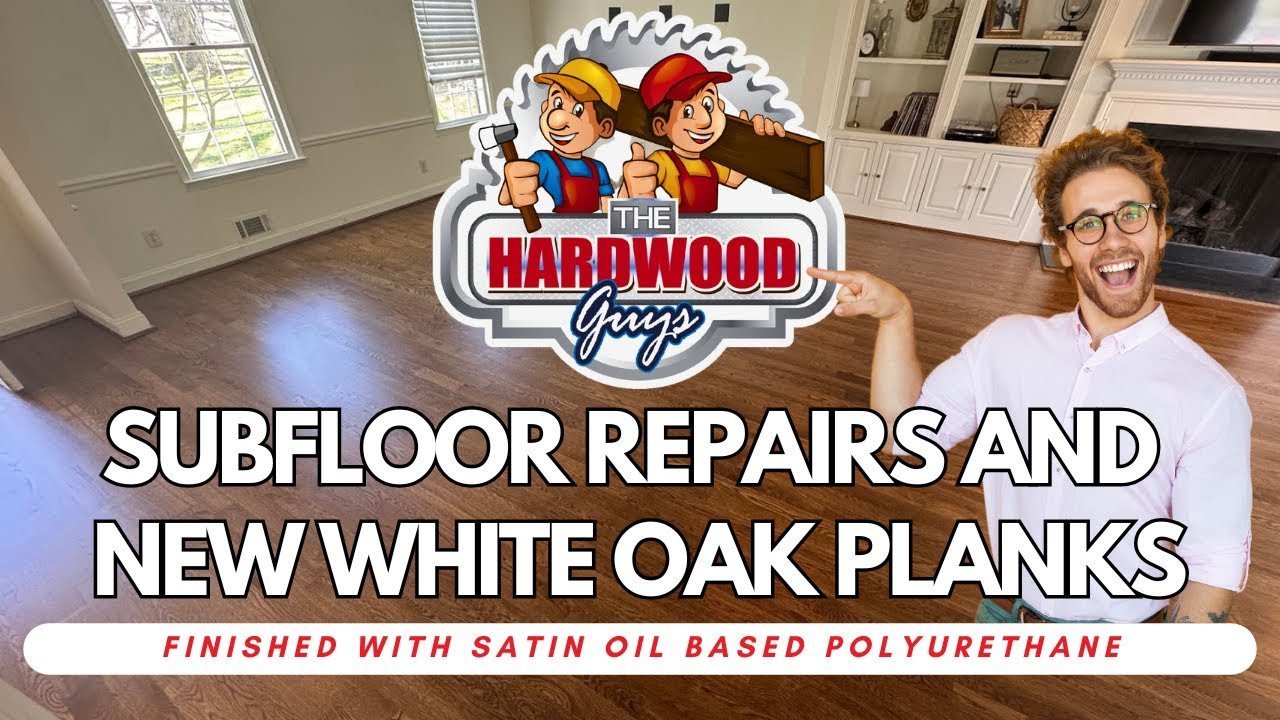
One Roswell job started with tile mud beds and hardwoods incorrectly installed over particle board, and all of it had to come out. New plywood and sleepers leveled the subfloor, then white oak select grade planks went down, finished with Provincial stain and oil-based polyurethane. Video posted March 2025. You can watch it under Watch Our Work in Roswell, GA.
A floor that is still sound is usually a refinishing job. If only the finish has dulled, a screen and recoat may be enough. Damaged boards can often be fixed through hardwood floor repairs instead of tearing out the whole floor. Replacement is for floors that cannot be saved.
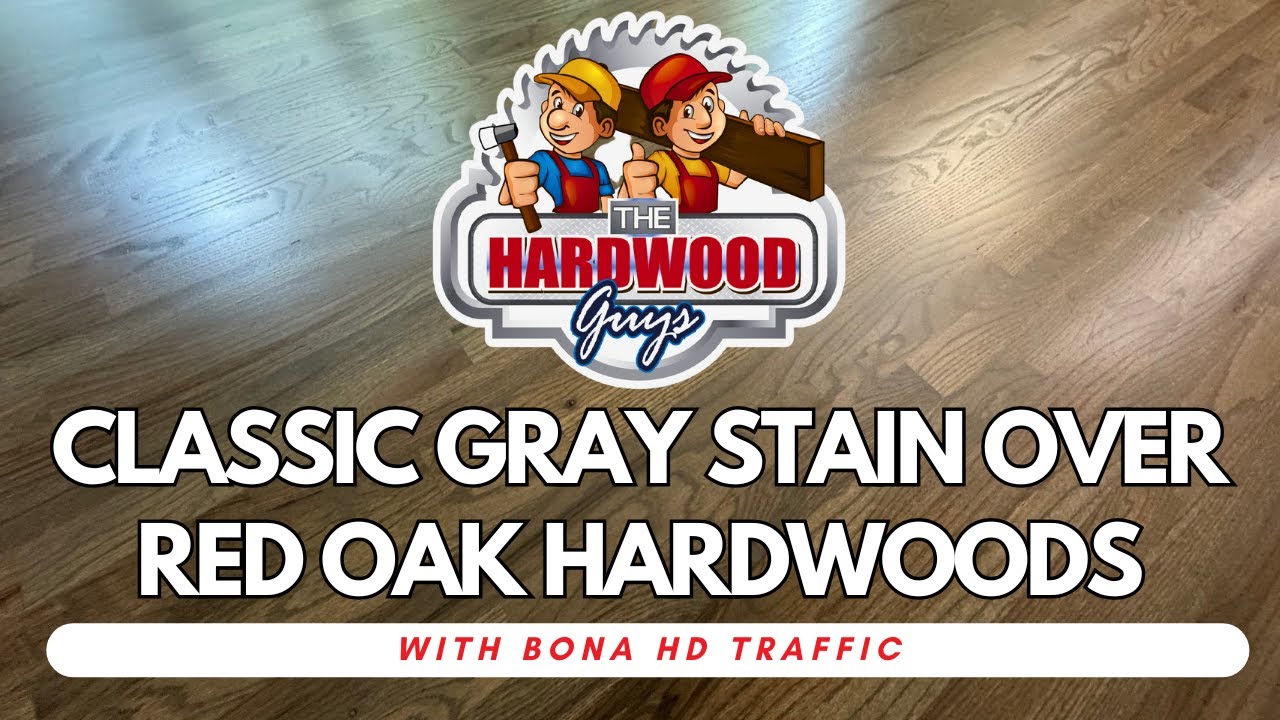
At the large end, our Roswell Classic Gray job covered nearly 3,000 square feet of red oak, stair treads included, in DuraSeal Classic Gray with Bona HD Traffic in a satin sheen. Video posted October 2024. You can watch it under Watch Our Work in Roswell, GA.
Call 470-826-3581 or request a free estimate online. We serve Historic Roswell, Canton Street, and all of Fulton County, and we’re open 24/7.
A member of The Hardwood Guys team will call or text you to schedule your free on-site estimate. We schedule 24/7.
Sand, stain, and dustless-finish worn floors back to a like-new look without replacing a single board.
Solid and engineered hardwood installed with a subfloor and moisture check first.
Waterproof-rated vinyl plank, including COREtec and NuCore, for kitchens, baths and basements, and AquaGuard laminate for kitchens and finished basements.
Fix squeaks, gouges, water stains, and pet damage — repaired to match the surrounding floor.
Screen-and-recoat and deep cleaning that extends the life of your floors between full refinishes.
Premium natural-look finishes — Rubio Monocoat, Bona Craft Oil, and Pallmann Magic Oil — for a low-sheen, low-VOC result.
A refinish in Roswell starts with finding out what is under the finish and how much wood is left to work with. That answer decides how deep we sand, which finish fits, and whether sanding is the right move at all. Our hardwood floor refinishing page covers the full process.
For original floors, read A Roswell Project Note and our FAQ on how heart pine and narrow-strip oak differ when refinished. We measure remaining thickness before any sanding. If the measurement says a floor cannot take another full sand, we tell you so and the plan changes to a screen and recoat or replacing the worst boards.
In a newer Roswell home, the choice is usually a full sand or a screen and recoat, and we make it on site. A full sand goes to bare wood, so it is how you change the color or deal with scratches that have gone into the wood. A screen and recoat renews the finish and keeps the color you have, which suits a floor that is dull but sound. If you want to move to an oil finish such as Rubio Monocoat, that means sanding to bare wood, so it is a full-sand job rather than a recoat.
One Roswell refinish we filmed used DuraSeal Classic Gray stain over new and existing red oak boards. The job covered nearly 3,000 square feet of flooring, including refinished stair treads. We sanded with multi-disc equipment, which leaves a very flat surface, then sealed everything with Bona HD Traffic in a satin sheen. Video posted October 2024. The job is written up under Roswell Hardwood Floor Projects, and the video is under Watch Our Work in Roswell, GA.
When the stairs are refinished along with the floor, the treads are sanded and finished in the same stain and finish as the floor, so they match. Rails and posts are sanded by hand, so their color comes out similar to the floor but not an exact match. On the Classic Gray job above, the stair treads were refinished as part of the same job, and everything was sealed with Bona HD Traffic in a satin sheen. Our stair refinishing page has the details. Full stair refinishes carry the same 1-year warranty as our full floor refinishes.
We sand with multi-disc planetary sanders that pull most of the dust into a vacuum at the sanding head. That is the idea behind dust-contained planetary sanding. A full refinish is a multi-day job, with dry time between each coat. A screen and recoat is often finished in a single day. Drying and cure times depend on the finish you pick, so ask us what to expect for the one you choose.
New hardwood in Roswell starts with what the floor will sit on. We check a wood subfloor for moisture, squeaks and level before any wood goes down, and on a concrete slab we moisture-test first, because solid hardwood generally can’t go straight over concrete. Our hardwood floor installation process is laid out on its own page.
A new floor is only as dry and flat as what sits under it. On a wood subfloor we take moisture readings, listen for squeaks and check for low spots. Loose sheets get fastened, low spots get leveled and damaged sections get replaced. Over a concrete slab, the moisture test comes first and decides which products are safe to put down. If a reading comes back high, we tell you before any flooring goes down. When the old floor is in worse shape than a few repairs can fix, the whole subfloor gets rebuilt, as in the install below.
This Roswell job began with tearing out what was there. The old tile mud beds and the hardwood that had been installed incorrectly over particle board came out first. New plywood and sleepers went down to level the subfloor. Then the select grade white oak was installed and laced in. The new floor was stained Provincial and finished with oil-based polyurethane. The staircase was replaced too, with new box newels and square white balusters. Some poor fixes in the kitchen were repaired too. Video posted March 2025; you can watch it under Watch Our Work in Roswell, GA.
Solid hardwood is nailed to a wood subfloor and can be sanded and refinished again later. Engineered hardwood has a real-wood top layer and can be glued down or floated, which is why it is often the choice over a slab or in a basement. Our engineered hardwood page goes into more detail.
When new hardwood has to meet an existing floor, we lace the new boards in, so the new wood runs into the old instead of stopping at a straight seam. The Roswell install above is one example. If stairs or existing hardwood are part of your project, tell us early so we can match species, plank width and stain. If part of a floor can be saved, our hardwood floor repairs page covers that.
Some rooms are better served by something other than hardwood. For basements and baths we install LVP, including COREtec and NuCore, and a basement slab has to pass a moisture test first. Our Acworth page explains how we test slabs before LVP. For finished basements we also install AquaGuard laminate. Compare LVP and laminate flooring before you decide.
A wet floor in Roswell starts with the same questions every time: where did the water come from, how far did it travel, and what can the wood still take? Our water-damaged hardwood floor repair page has the full process. This section covers how it goes on a Roswell call.
A cupped board has raised edges and a sunken middle, which means the wood was wetter on the underside. That usually points to a leak below, a damp crawlspace or moisture rising through a slab. Cupping is the most common symptom and the most forgiving one. A crowned board is high in the center and most often follows a sanding job on a floor that had not finished drying. Buckled boards have lifted off the subfloor and are almost always replaced. A moisture meter on the boards and the subfloor tells us whether the wood is still wet, since what shows on top does not tell us how far the water traveled.
Boards that dried flat with a sound core can often be sanded and refinished instead of replaced. A board with a crushed tongue or a spongy feel is finished, and it comes out. When the damage sits in one area, we cut out the bad boards, lace in new ones of the same species and width, and sand and finish across the repair so it blends with the floor around it. New and old boards take stain differently, which is why the sanding covers more than the repaired boards. We will not sell a full sand over a wet crawlspace that is still feeding moisture, so an active source gets fixed first.
On video, a recent water-damage repair laced new #1 grade red oak in only where the water had reached, added plywood subflooring where the floor sat over concrete, and ended with laundry-room tile plus drywall and paint repairs.
A recent water-damage repair: new red oak laced in, Weathered Oak stain
Video posted April 2025
For original older floors, see A Roswell Project Note and our FAQ on replacing a few damaged boards in a heart pine floor.
On a first visit we photograph the damage and take moisture readings on the floor and the subfloor, and we write up an estimate to go with them. That record shows what was wet, how far it ran and what the repair covers. When the drying is a bigger job than the flooring, we coordinate it with a mitigation company. We document and repair. Your homeowner's policy decides coverage. Call or text photos of the damage, and you will hear back from us the same business day.
Real Roswell jobs, each from a video we filmed on site. Details come from our own write-up of each job.
A Roswell refinish of nearly 3,000 square feet of red oak flooring, stair treads included. We sanded with multi-disc equipment to leave a flat surface, stained the floors DuraSeal Classic Gray for a modern look, and sealed them with Bona HD Traffic in a satin sheen.


A Roswell home where the old floor setup had to come out before new wood could go in. After new plywood and sleepers leveled the subfloor, we installed select grade white oak planks, stained Provincial and finished with oil-based polyurethane. The staircase was replaced with new box newels and square white balusters.


Real jobs, real homeowners, real floors — filmed on site. Nothing plays until you press it, so the page stays fast.
Hardwood Refinishing in Roswell, GA: Classic Gray Stain with Bona HD Traffic
Roswell, GA: New Plywood Subfloor and Laced-In Select Grade White Oak
We have 10,000 jobs completed in Georgia — the crew has been doing this since the early 2000s, and a good number of those jobs have been historic homes where getting the sanding depth and stain match right actually matters. The Hardwood Guys have 10,000 jobs completed in Georgia, across our Fulton County and Cherokee County service area. For a floor with this much history, we think that track record matters more than the lowest bid. Roswell borders Alpharetta, and we work there too; see our page on hardwood flooring in Alpharetta.
In Historic Roswell, original heart pine or oak may already have been sanded down close to its limit by a previous owner or a past refinishing job done without checking the wood's remaining thickness first. We measure before we sand, and if a floor genuinely can't take another full pass, we'll say so and talk through options like a screen and recoat or selective board replacement instead of risking the original wood.
“The Hardwood Guys are amazing! They refinished and installed new hardwood floors in my house in December, and we could not be happier with the result! They are very professional and easy to work with!”
10,000 jobs completed in Georgia
Financing available — up to $100,000, with interest-free options from $30/mo. Subject to approval.
Cupped or buckled floors after a leak? We repair, replace and refinish matching boards and document the damage. Your homeowner's policy decides coverage. See water-damaged hardwood floor repair.
Yes — that's a large part of what we do in this part of town. We check wear layer and remaining thickness before sanding and adjust our approach for older, previously-refinished floors.
Not at all. GA-400 makes it a straightforward drive, and Roswell is one of our regular service areas along with the rest of Fulton County.
Heart pine is softer and has a lot more character in the grain, with knots and color variation that oak doesn't have, so it takes sanding differently and scratches a little easier. Narrow-strip oak is harder and more uniform, which is more forgiving under the sander. Neither is better or worse — it just changes how careful and slow we go on a given floor.
That's your call. A standard refinish sands down to bare wood and removes that patina along with the old finish, giving you a clean, even color again. But if you want to keep some of that history, we can talk through stain options that echo the aged tone instead of erasing it. Just tell us up front which direction you're leaning before we start sanding.
Not really, and that's good news. A 1990s floor usually has more wood left to work with and hasn't been through multiple prior refinishes, so we can sand it more like a standard job instead of babying every pass. We still check the floor before we start on any home, but a floor like yours generally gives us more room to work with than a century-old one does.
We do our best to source reclaimed or matching heart pine so the grain and color are close from the start, then blend the sanding and staining across the repaired area and into the surrounding boards rather than treating it as an isolated patch. Heart pine's natural color variation actually helps hide a repair better than a more uniform wood would, so it blends in well.
Stop the leak, pull up any rugs, and run dehumidification if you have it. Take photos before you clean up. Do not run a rental sander on cupped boards hoping they flatten, because sanding before the wood has dried is how a repairable floor gets ruined. Then call or text us photos and we will tell you what to expect.
No. Cupped boards often settle partly or fully once the wood and subfloor are back to normal moisture, which can take weeks, not days. We take readings during drying and decide on the numbers. Buckled boards are almost always replaced.
We document and repair. Your homeowner's policy decides coverage. We do not decide what a policy covers; we give you photos, moisture readings and a written estimate for the work.
How long a refinish takes depends on the size of the floor, its condition, whether you are staining, and how many coats of finish it gets. A full refinish spans multiple days: we sand to bare wood, stain if you are changing the color, then apply multiple coats with drying time between each one. If a screen and recoat is all the floor needs, it can often be finished in a single day. After we see your floor in person, you get a written estimate.
Yes, with a full sand down to bare wood. A screen and recoat keeps the color you have. Before we stain, we put a sample on your own floor and you approve it. The same stain looks different on red oak than on white oak, so we cannot promise an exact match to a photo or a color chip. Oil finishes such as Rubio Monocoat also need bare wood, so switching to one means a full sand too.