
Blog · Stains & Finishes
Matte Sheen Polyurethane -- Pros and Cons of a Matte Based Polyurethane
Looking for a way to make your surfaces look stunning and stay that way for longer? Look no further than our matte oil-based matte sheen!
By David Brannan · Published March 29, 2023 · Updated August 5, 2026 · 9 min read
- Hundreds of Five-Star Reviews
- Featured on TV Multiple Times
- 25 Years of Experience
- Insured & Family Owned
Matte is the lowest-sheen finish we put on hardwood, and on a full refinishing job it's the one clients ask for most. It doesn't make a floor look unfinished or dull. Done right, it makes the floor look like wood again instead of like a coating sitting on top of the wood.
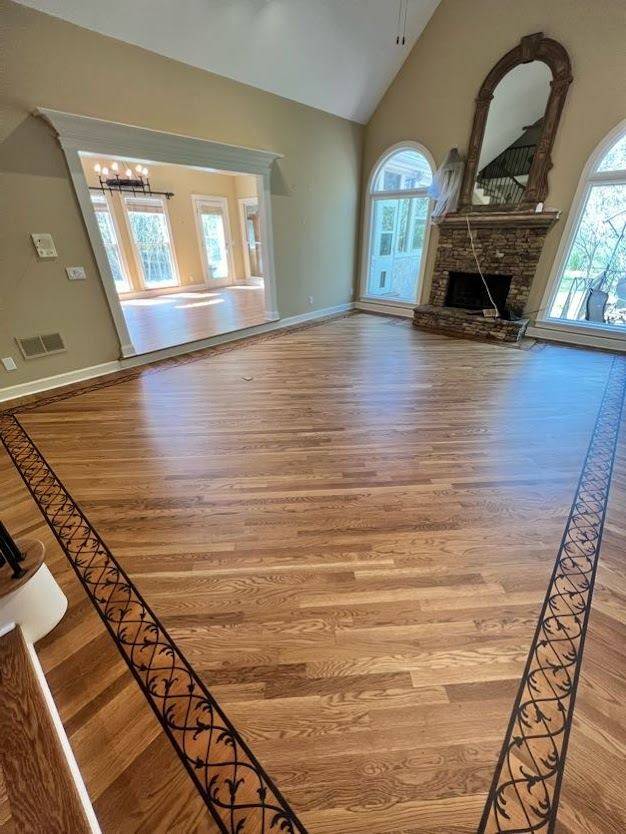
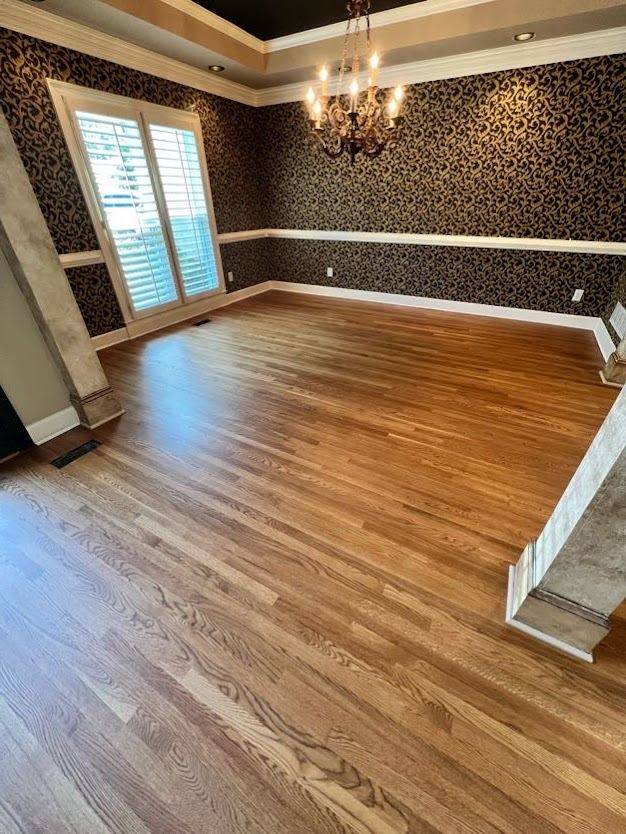
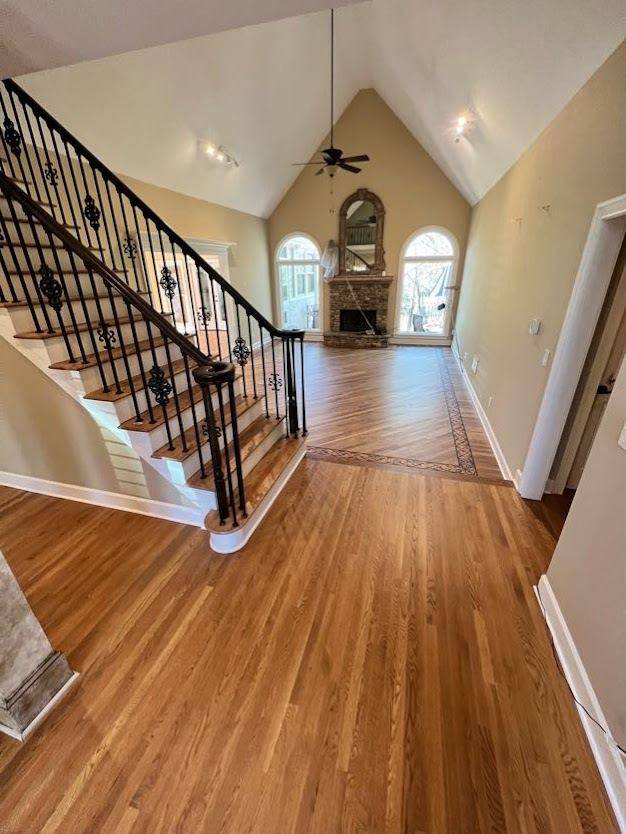
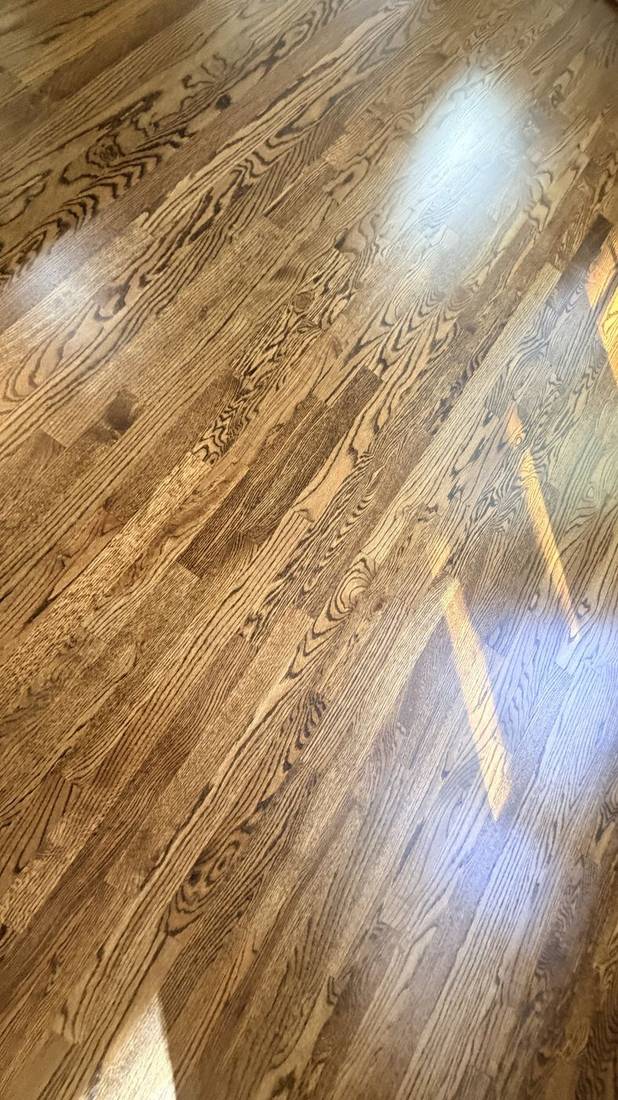
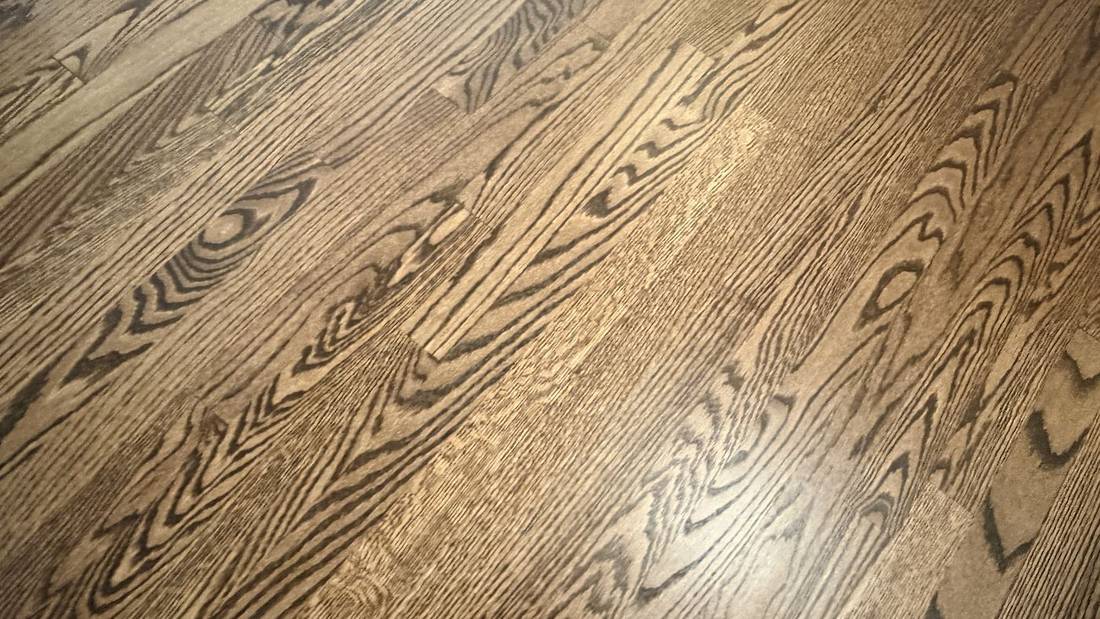
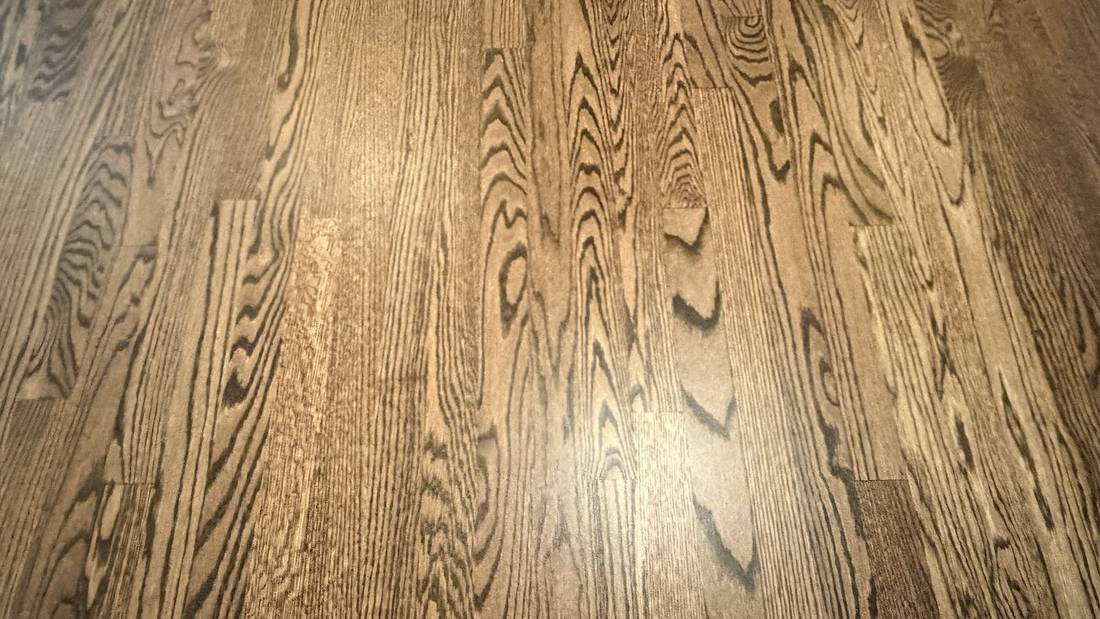
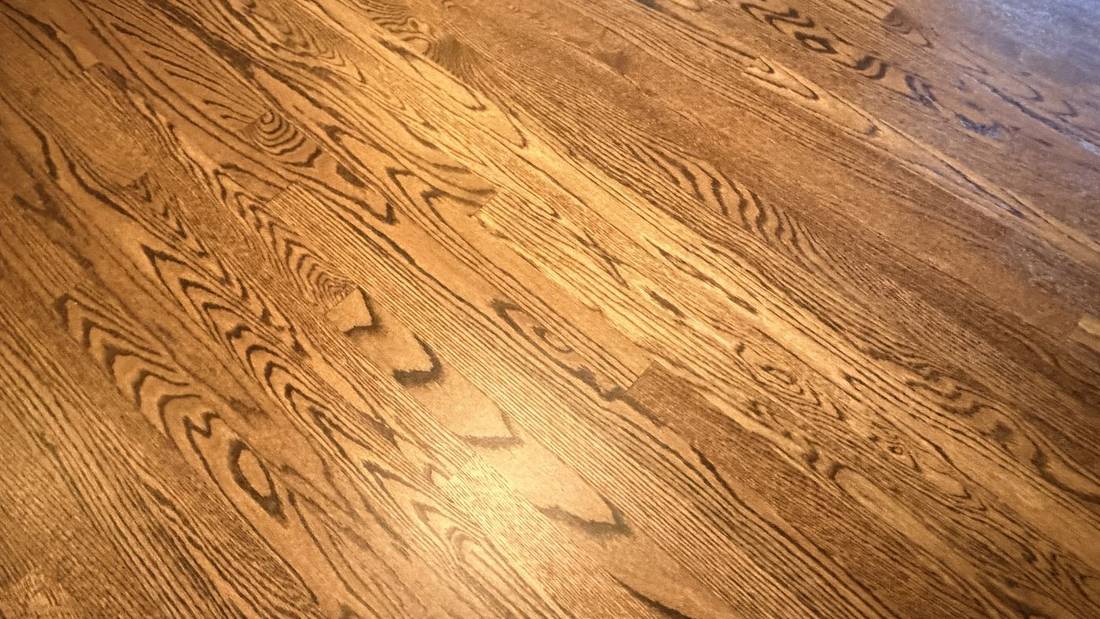
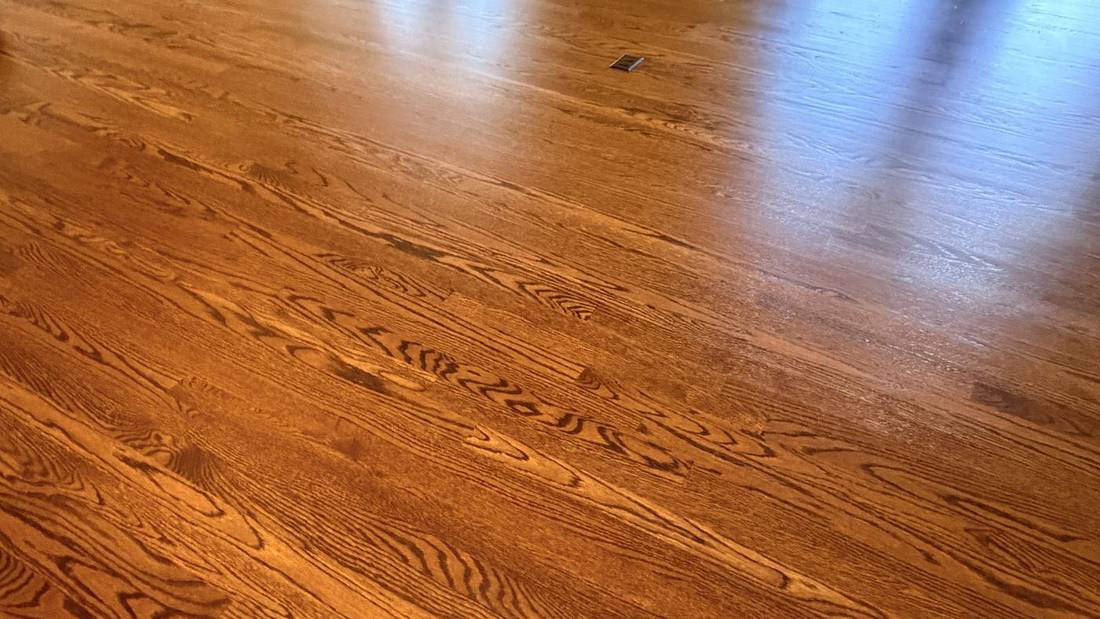
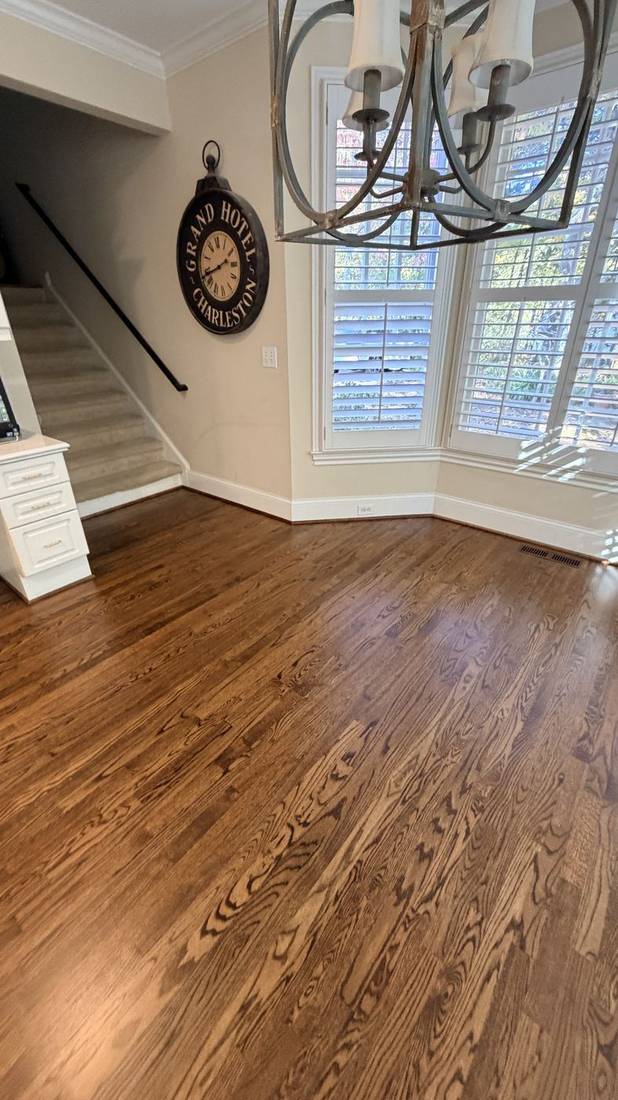
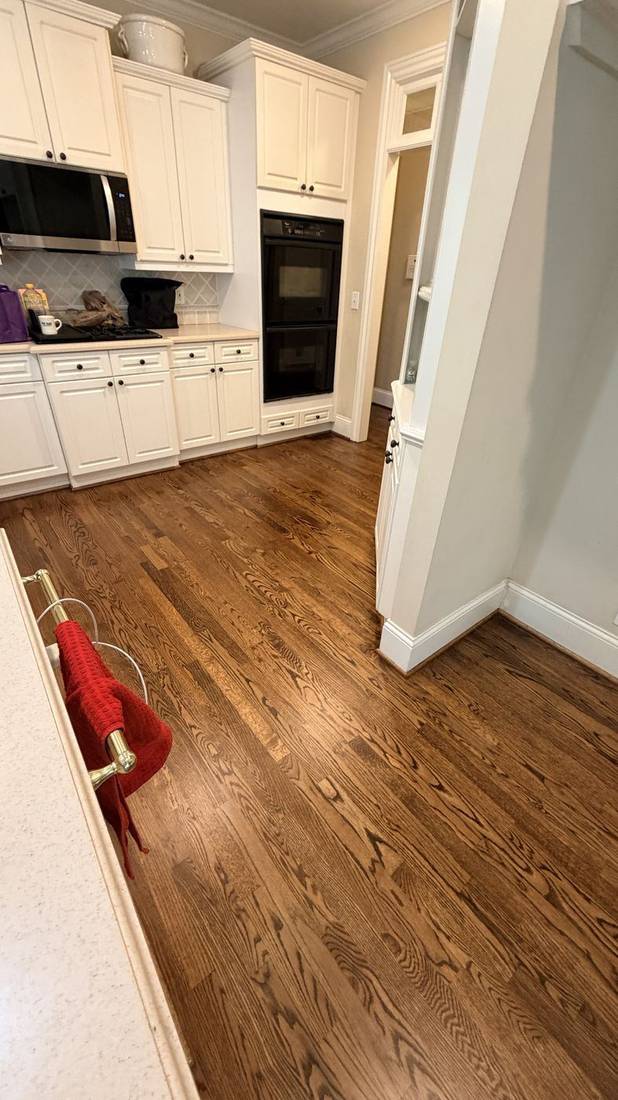
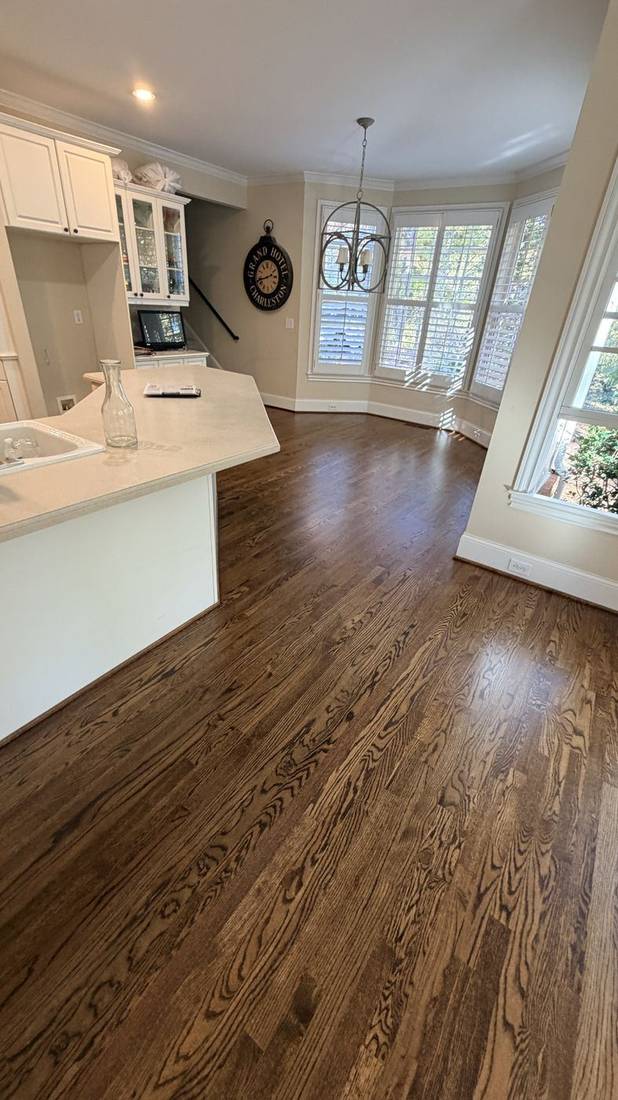
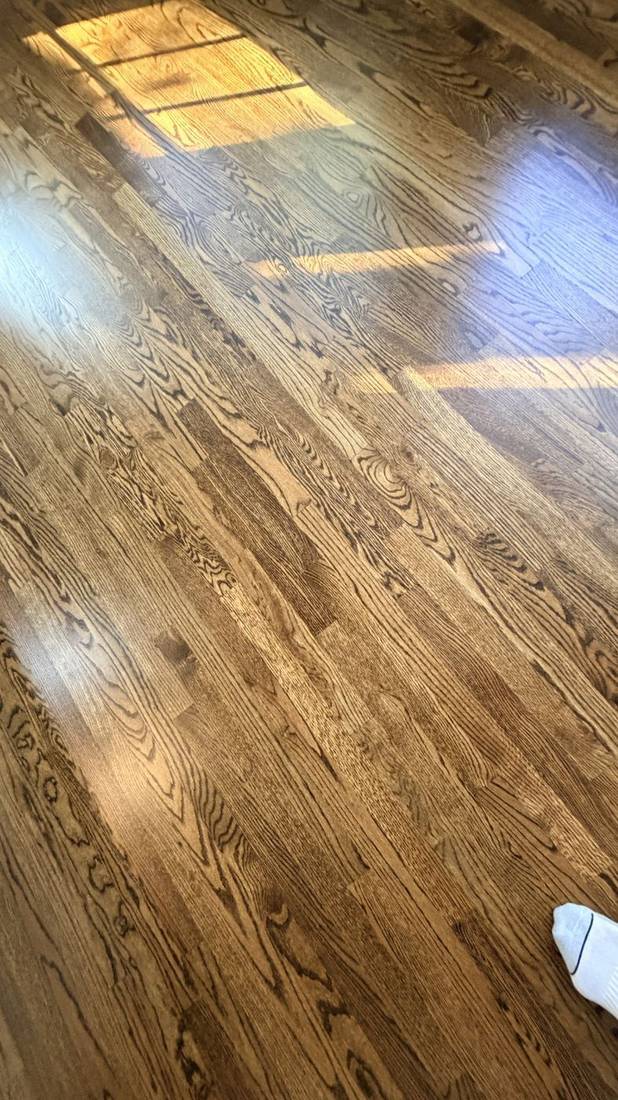
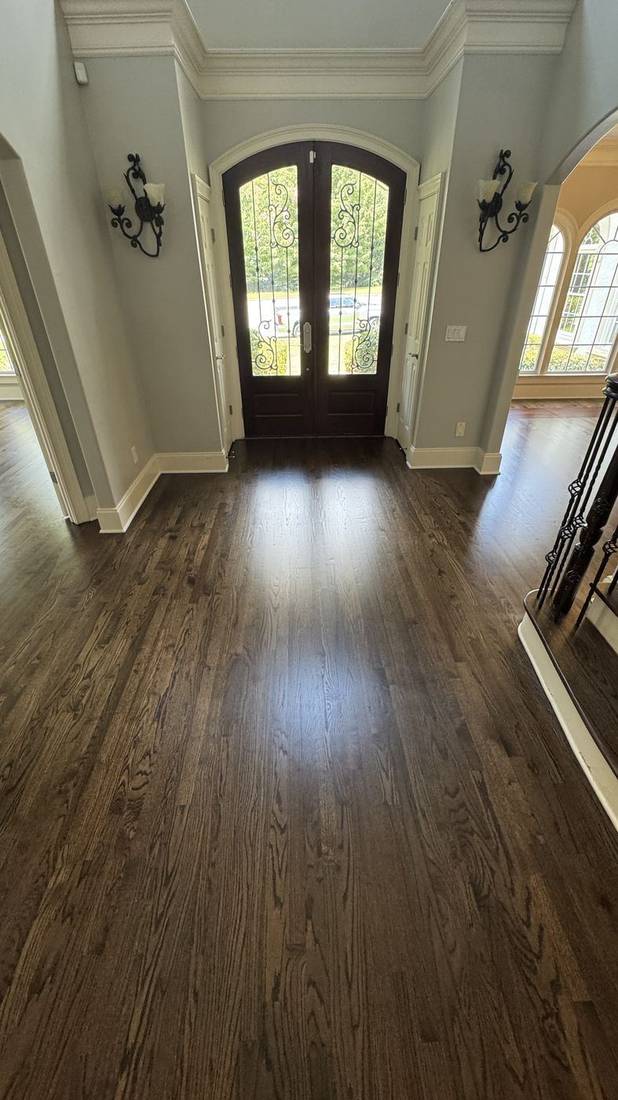
Below are three real jobs, all red oak, all finished with a matte oil-based polyurethane, so you can see how the same wood reads under three different stains. After that: whether matte really hides scratches, how to keep it clean, the exact finish we apply, and how to decide between matte and satin if you're still on the fence.
What matte polyurethane actually looks like
Sheen is a measure of how much light a finish bounces back at you, usually expressed as a percentage gloss reading. Gloss reflects the most light and matte reflects the least, with satin sitting in between. Matte is the lowest sheen we offer on hardwood.
That low reflectance is the whole visual difference. A glossy or semi-gloss finish sits on the wood like a sheet of glass: you see the coating first and the wood second. Matte does the opposite. Light passes through without bouncing straight back at you, so what you see is the stain and the grain, not a shine. It is an oil-based polyurethane, the same category of finish as satin and gloss. Matte is not a different chemical; it's the same coating with flattening agents added to cut the reflectance.
Watch: matte vs. satin, and real jobs
Three short clips: one on choosing a sheen, two walking real red oak jobs. Video loads only when you press play.
Which sheen should I choose for my hardwood floors? Oil Based Matte or Satin? See the differences.
Dark Walnut Stain Over Red Oak. What Does it Look Like? With Oil Based Finish
Jobsite Walkthrough -- Provincial Stain over New Red Oak - Oil Based Polyurethane
Three real jobs, three different stains
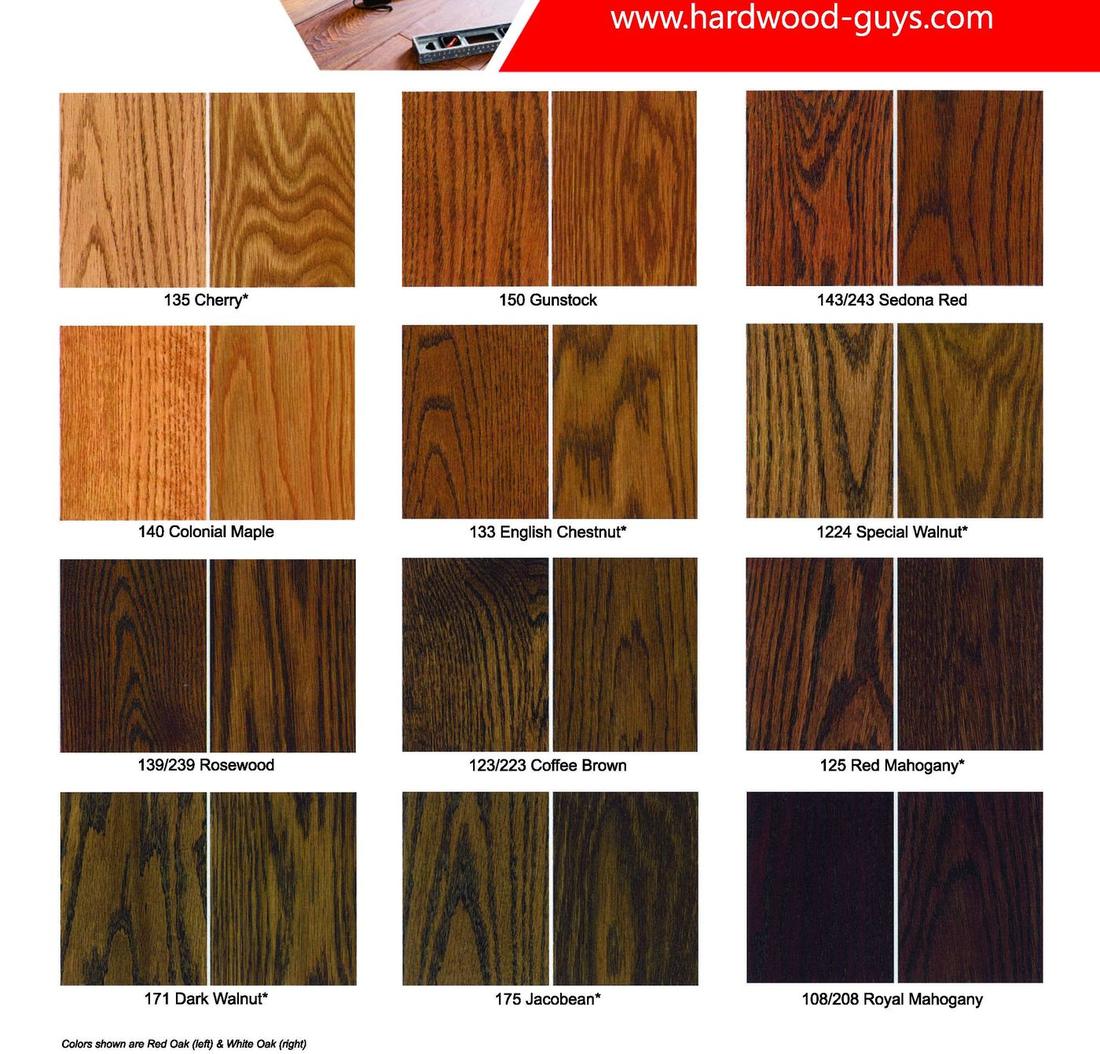
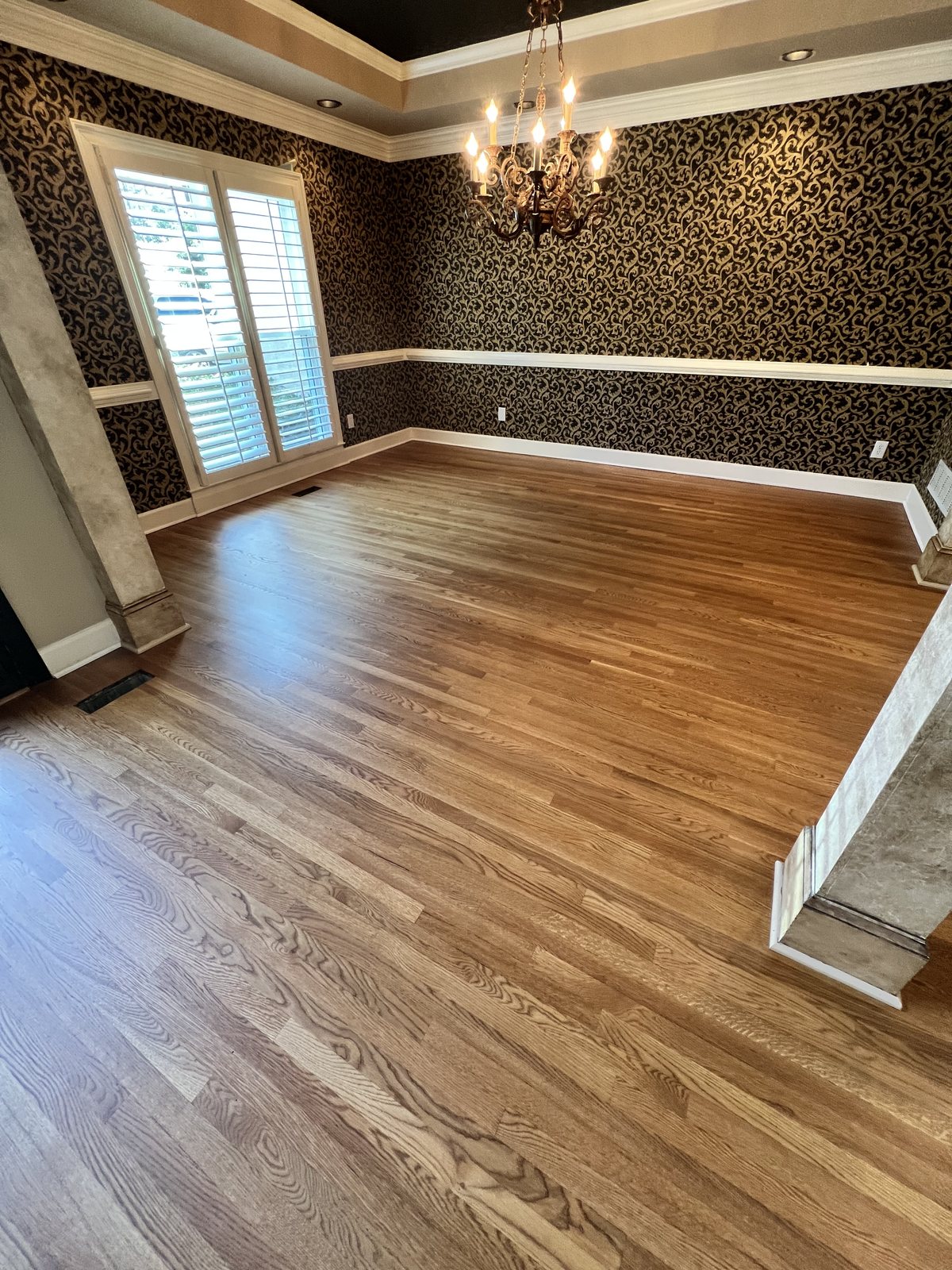
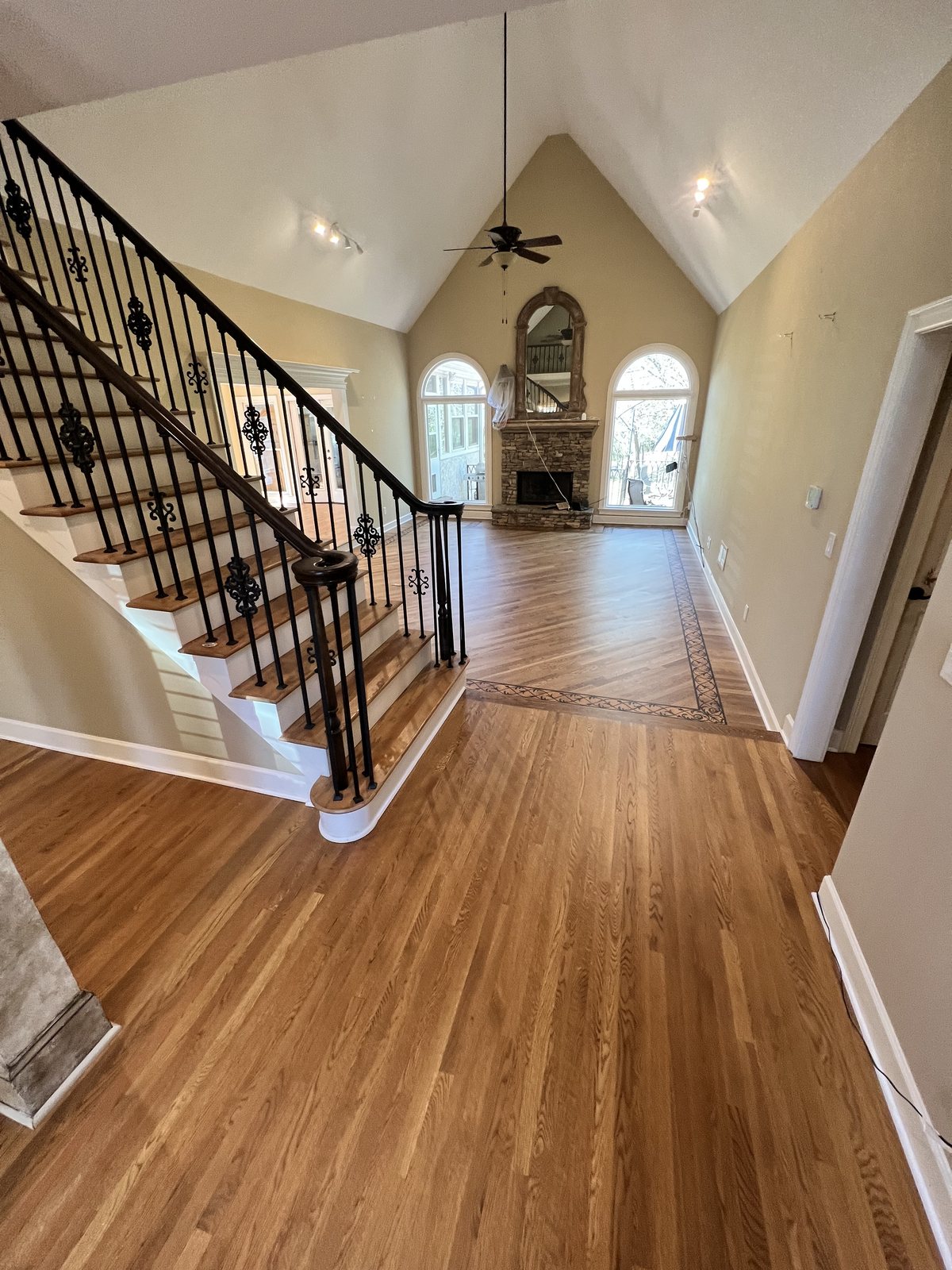
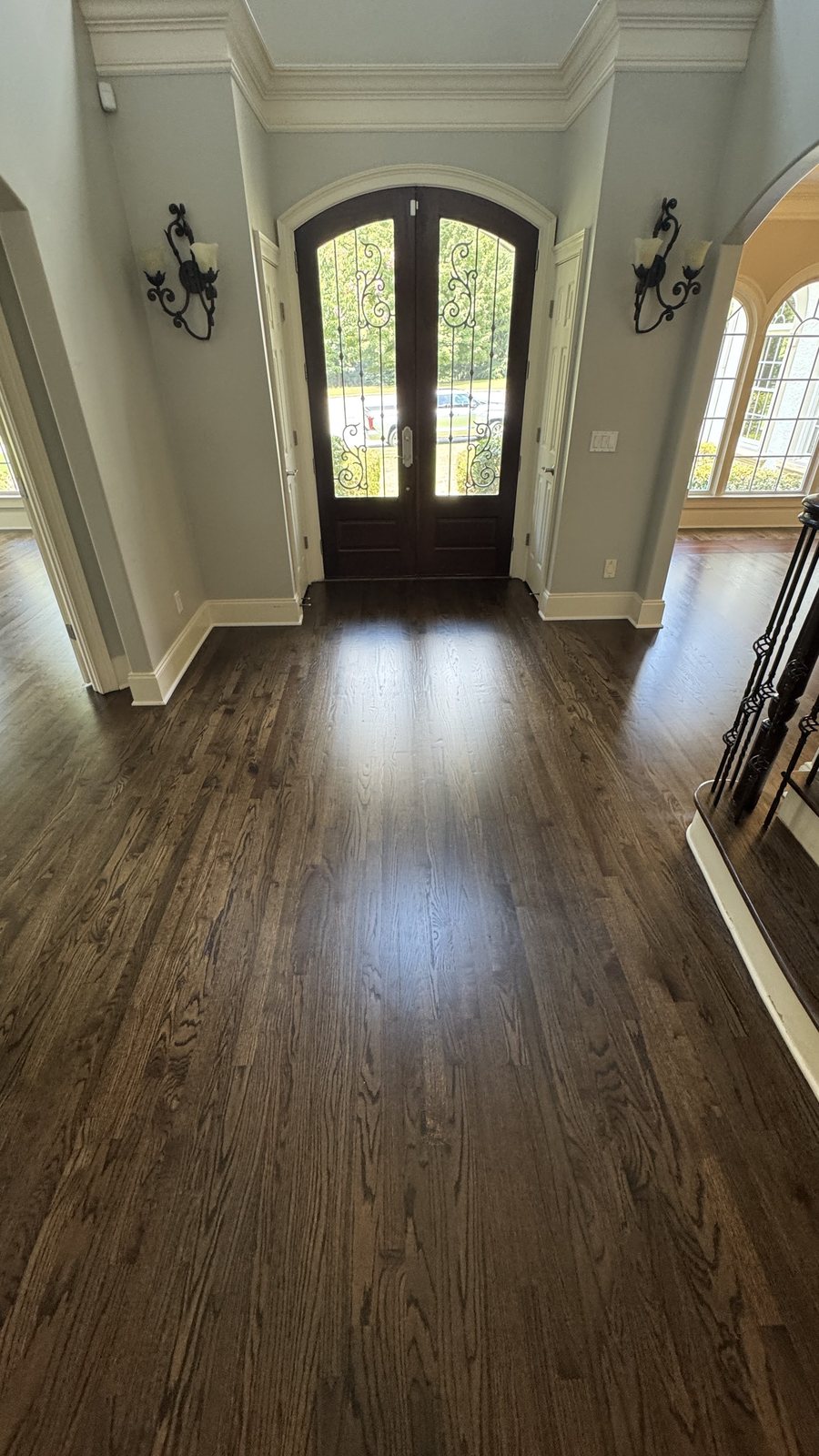
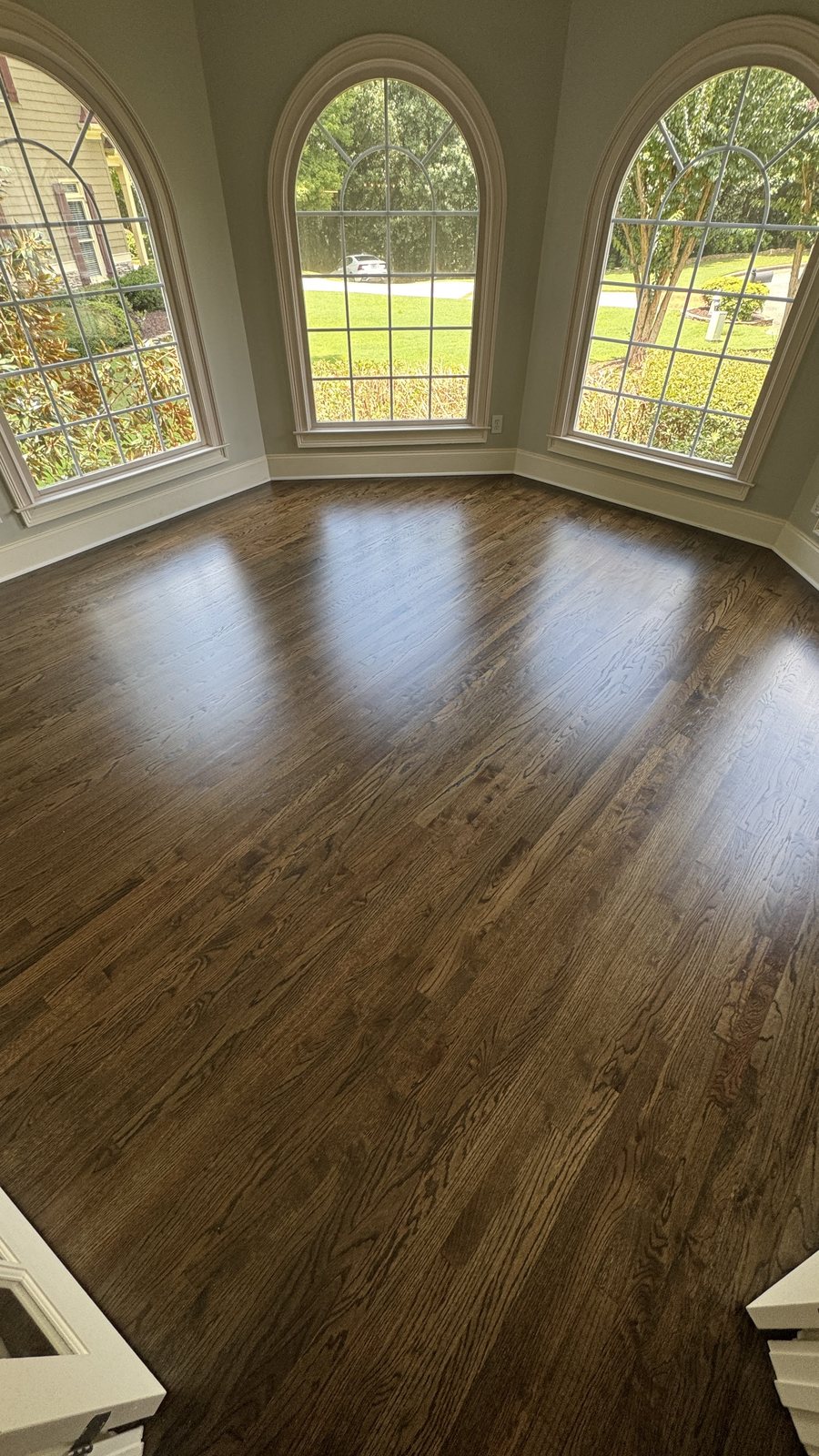
All three of these floors are red oak, all finished in matte. Red oak takes stain unevenly by nature, with open grain and some mineral streaking, which is exactly why it's worth seeing the same species under three different colors rather than judging from one photo. For the full range beyond these three, our stain chart covers the colors we work with most.
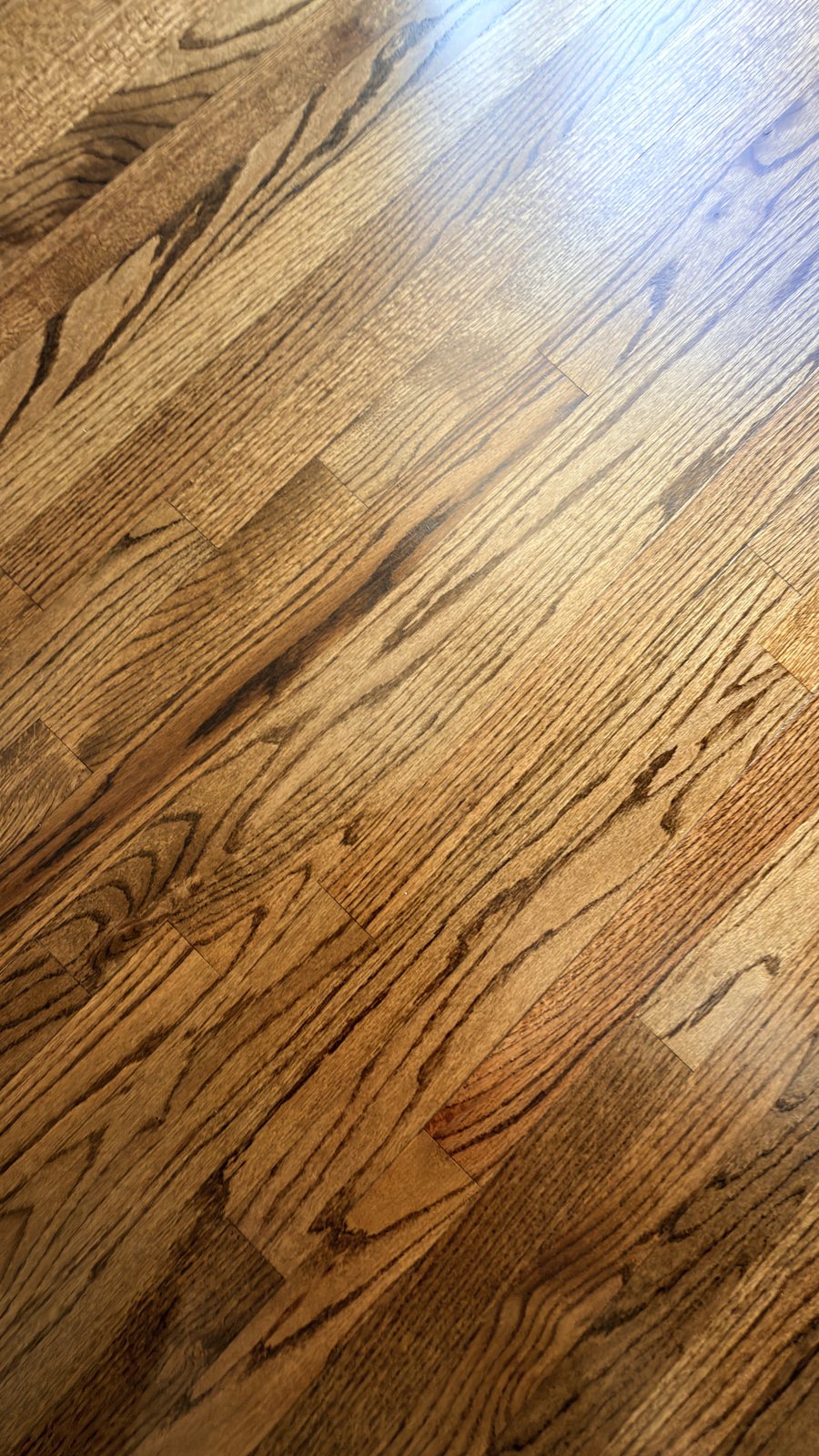
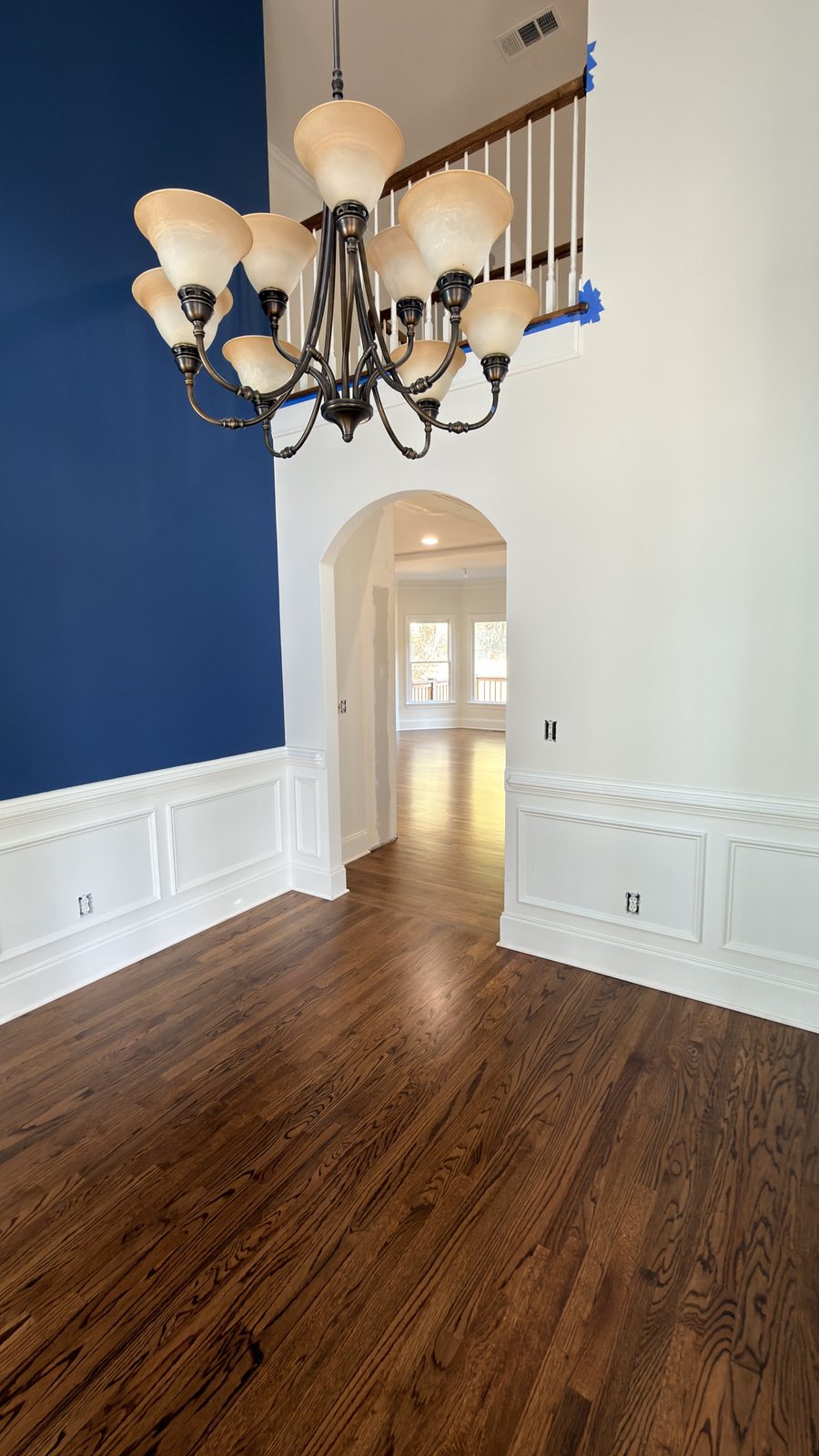
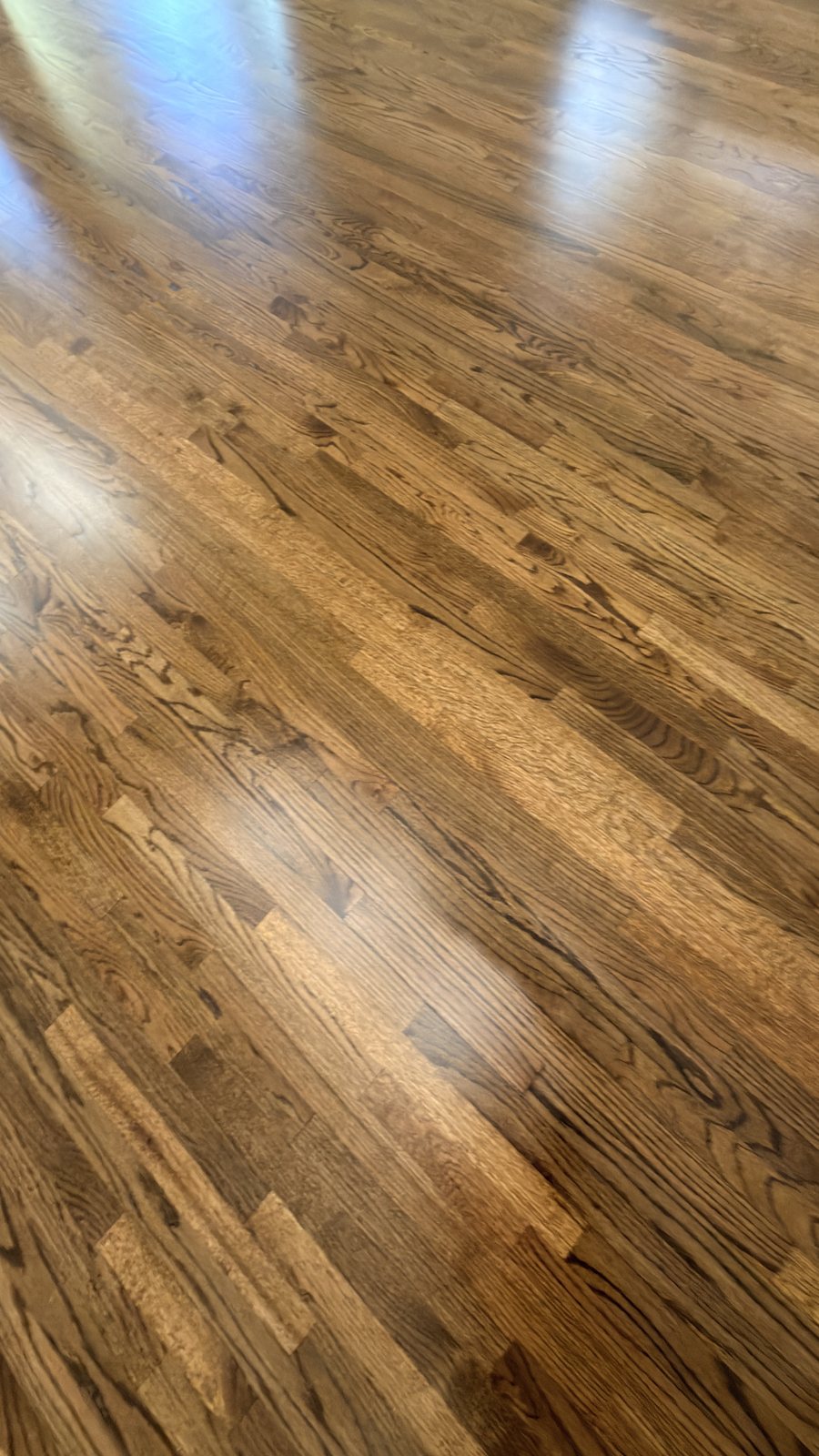
Minwax Honey over red oak
Honey is a warm golden brown that works with red oak's natural color instead of fighting it. Under matte, the grain stays highly visible. There's no gloss layer sitting over the top flattening it out, so every board shows its own figure.
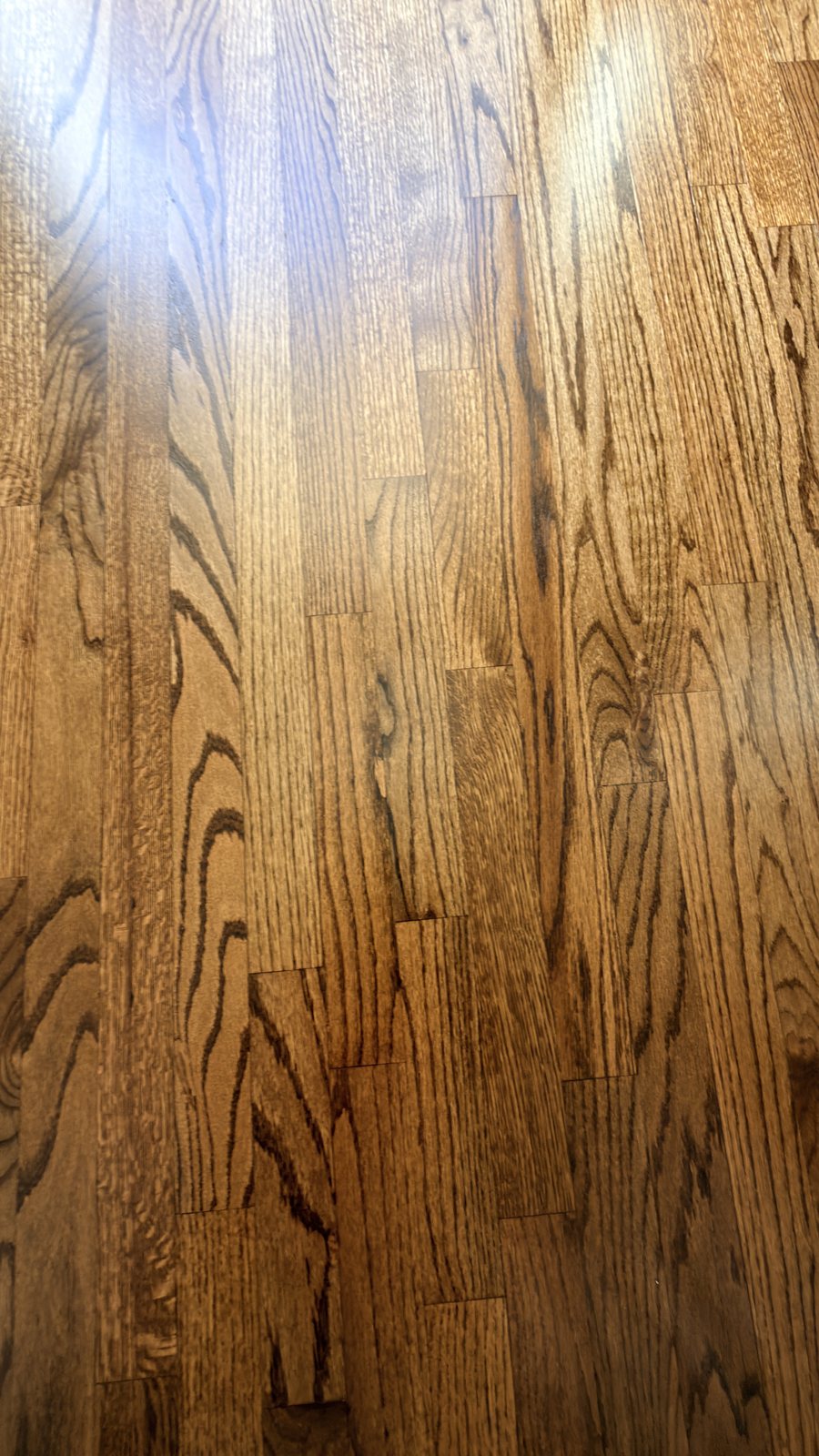
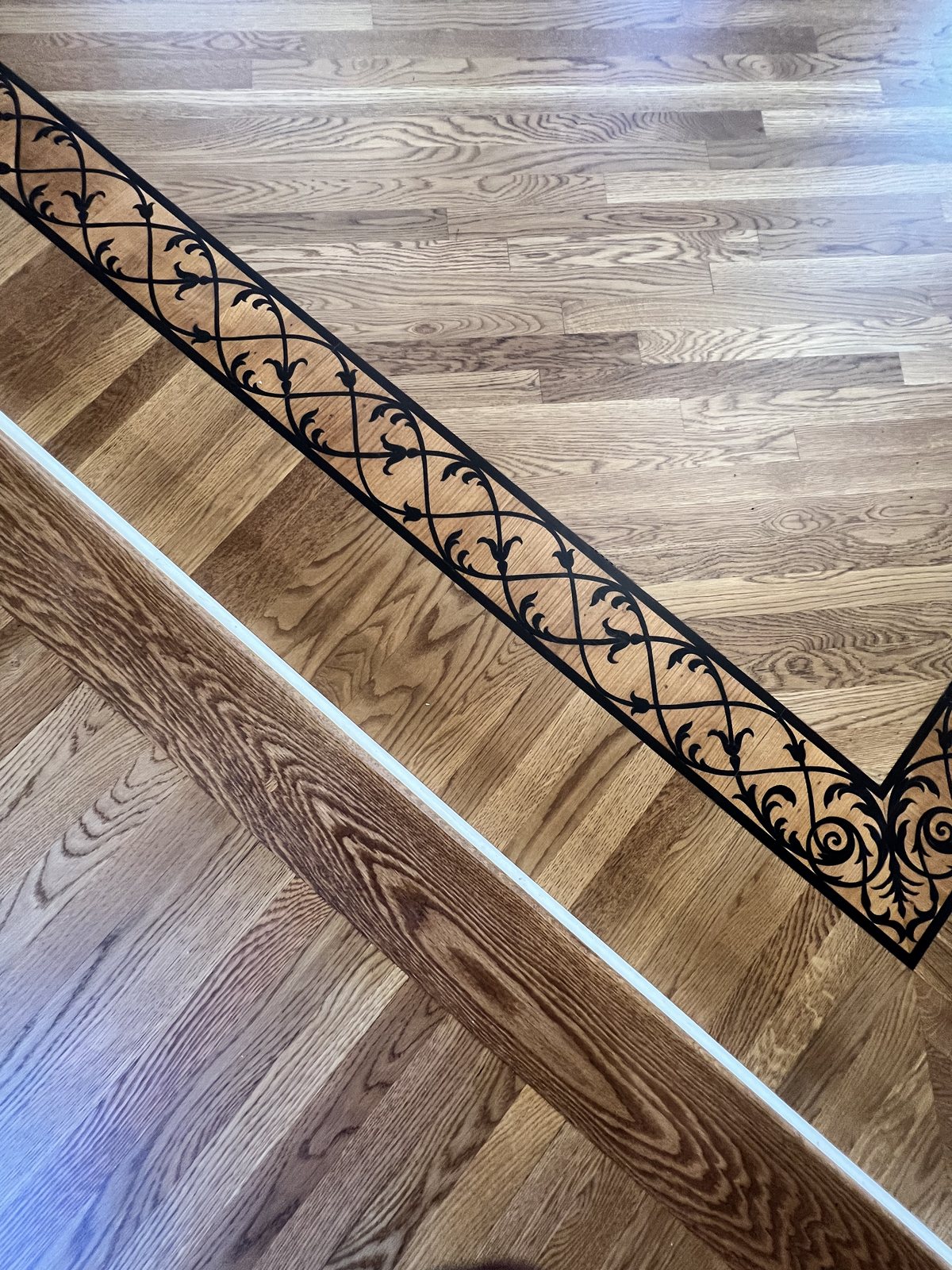
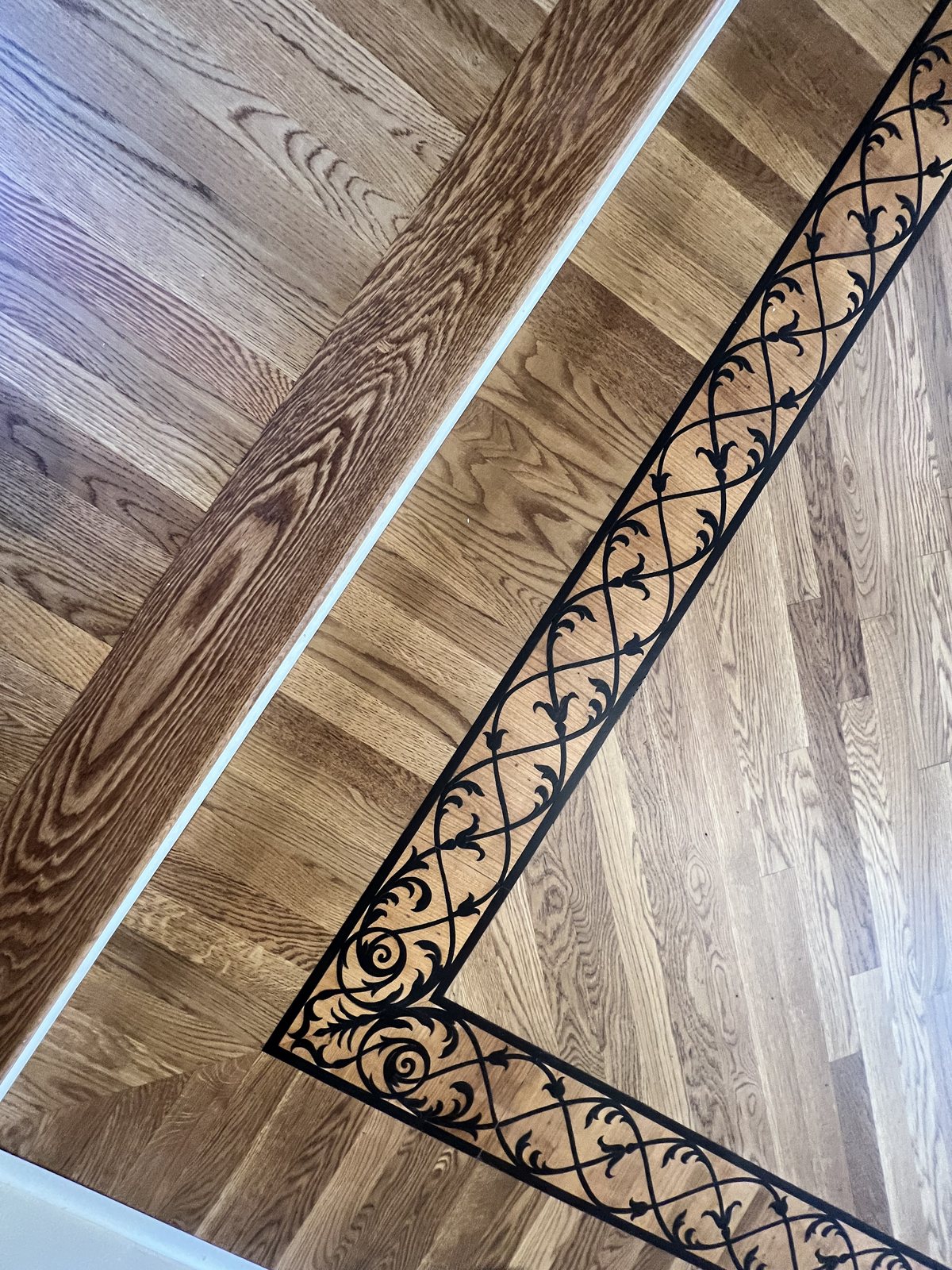
Minwax Golden Oak over red oak
Golden Oak is the lightest of the three and reads closest to bare wood. From a few feet away it barely looks stained. It suits anyone who wants a natural look without living with a true unfinished floor, and matte keeps that natural read instead of adding shine on top of it.
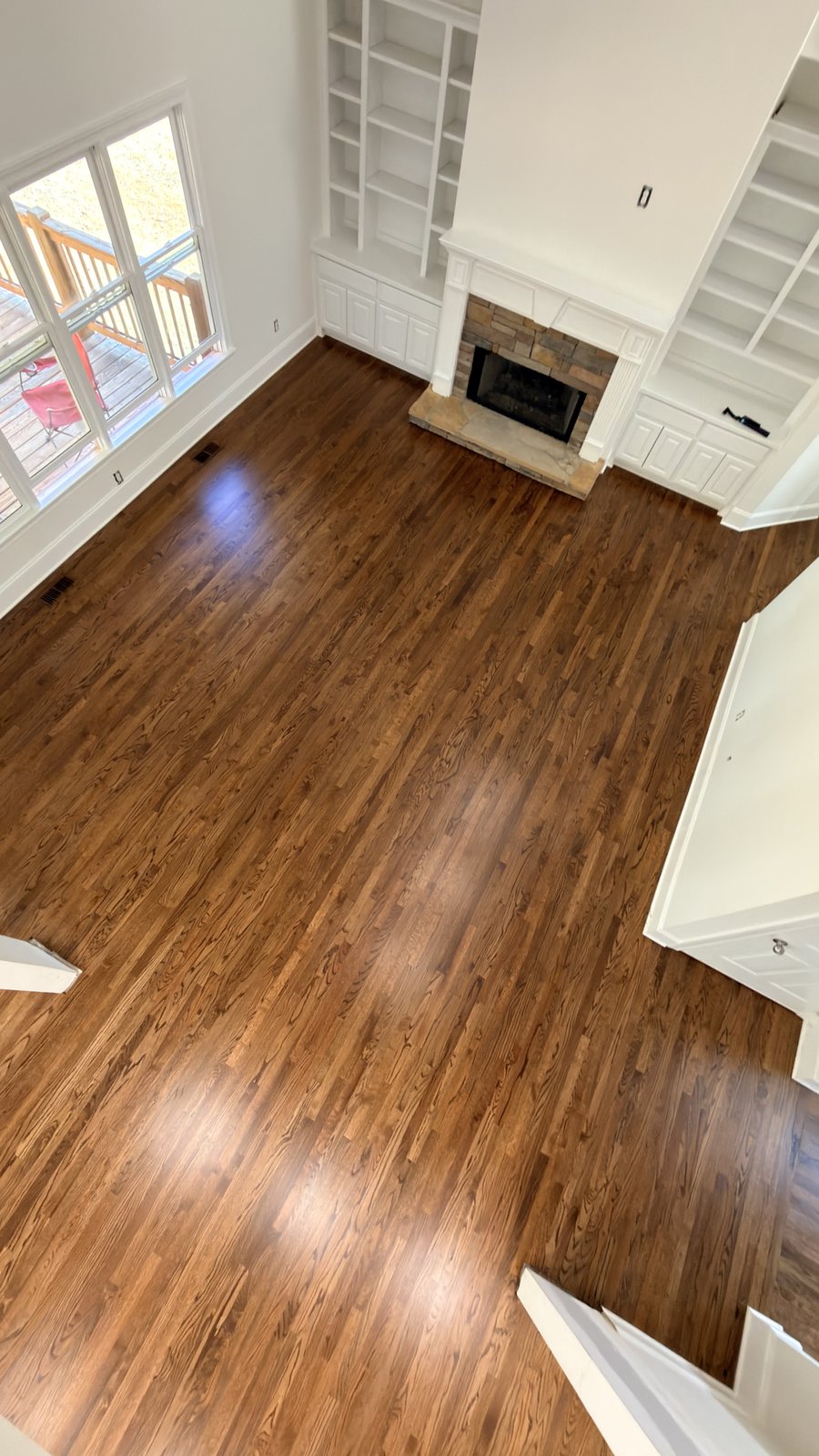
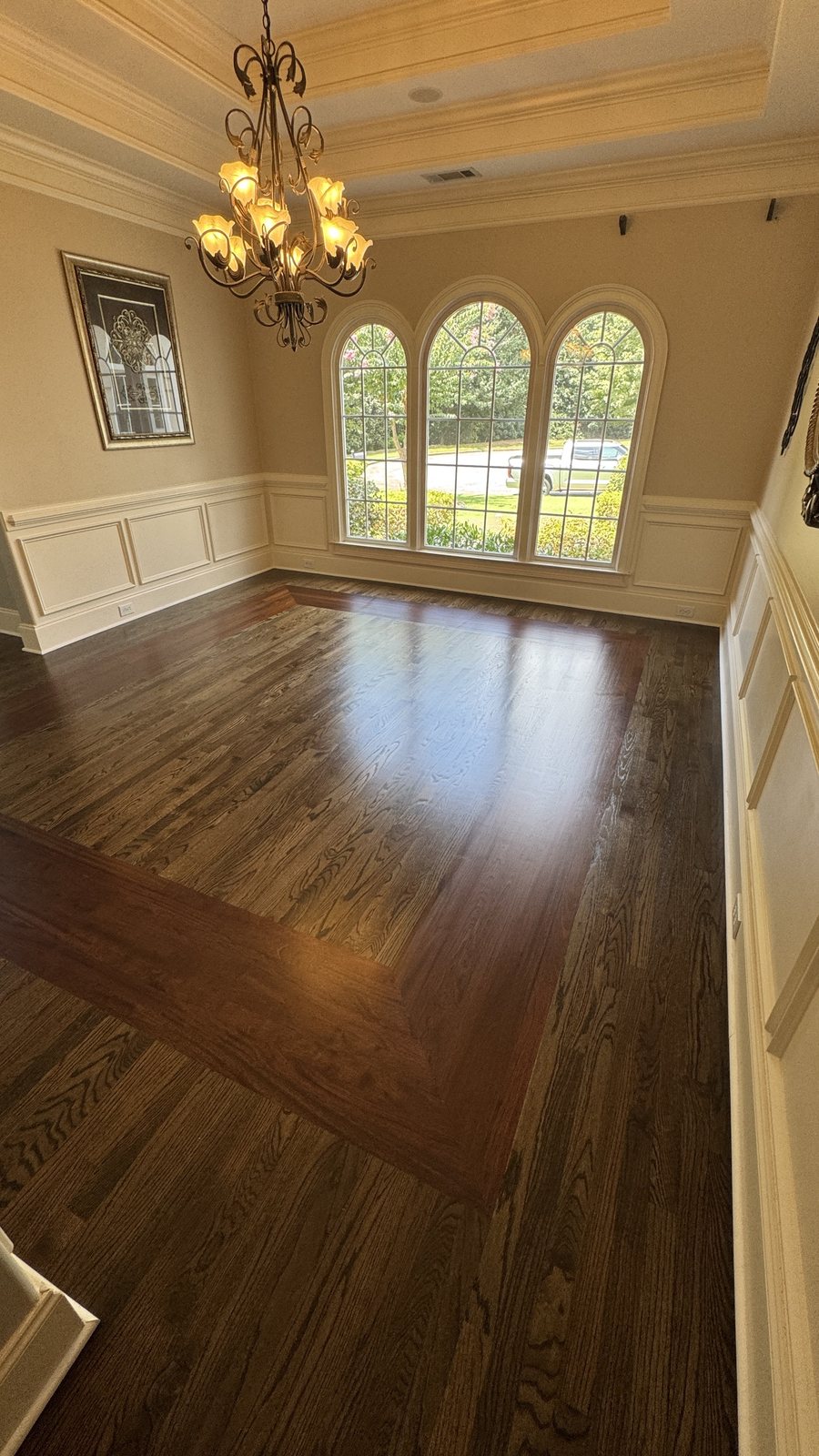
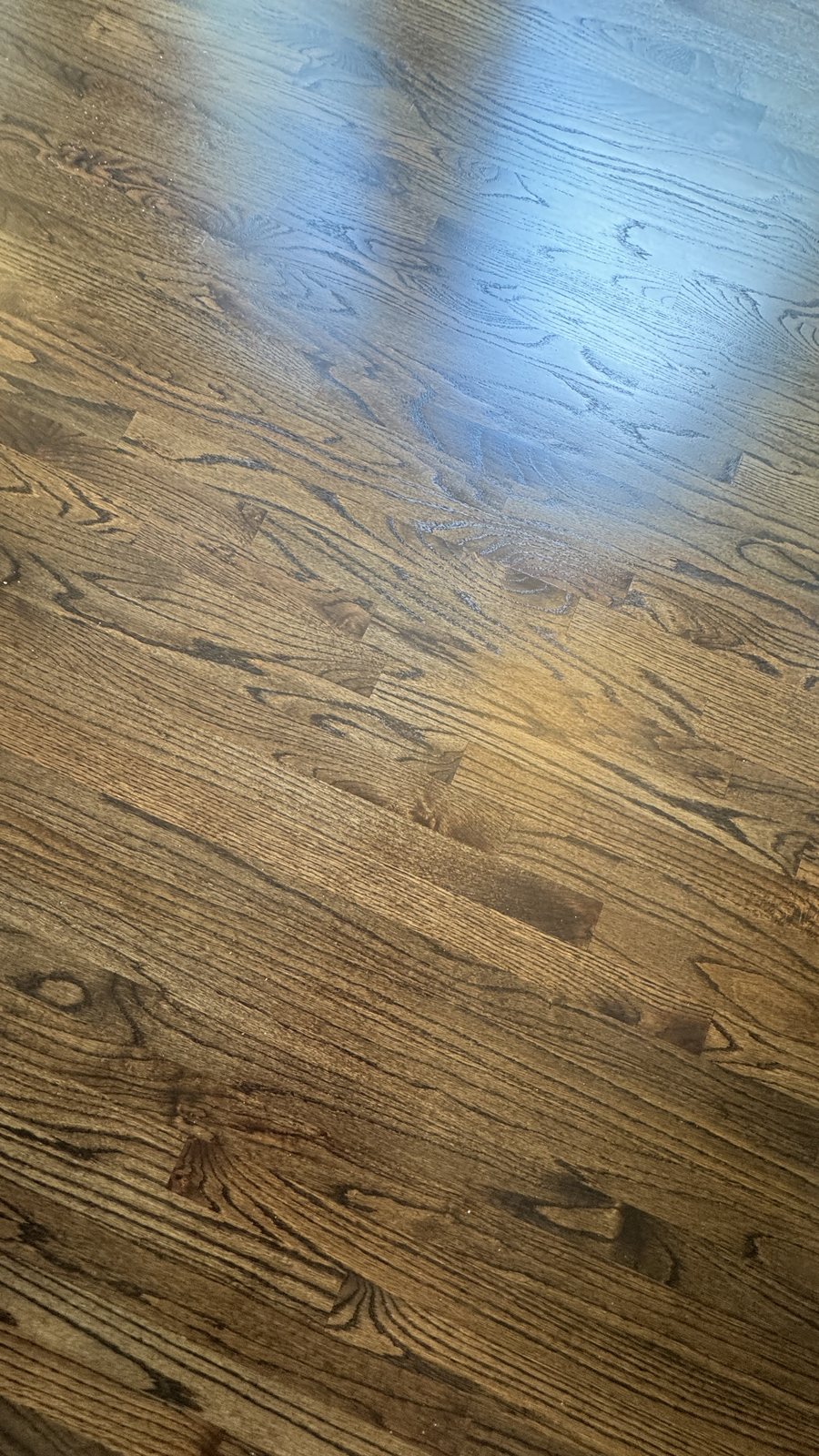
Dark Walnut over red oak
Dark Walnut goes the other direction: a deep, cool brown with the most contrast against the grain of the three. It's the stain where matte earns its keep most, since a shinier sheen on a dark floor shows every footprint or speck of dust the moment light hits it at an angle.
Does matte really hide scratches better?
Yes, relatively. A low-sheen surface scatters light instead of bouncing it straight back at you, so fine scratches, dust and everyday wear are harder to spot under matte than under a semi-gloss finish sitting at the same angle to a window or light fixture.
What matte doesn't do is make the floor physically harder. Scratch and wear resistance comes from the polyurethane coating itself: the number of coats, the product used, and how it was applied. It has nothing to do with how much light the topcoat reflects. A matte and a semi-gloss finish from the same can, applied the same way, hold up to daily wear exactly the same. Matte just makes the marks less visible while a real scratch is there.
Cleaning and upkeep
Matte hides footprints and haze better day to day, and it also hides streaks better when a floor gets cleaned with the wrong product. On a glossy finish, a bad cleaning job is obvious from across the room; on matte it's much less so.
That said, hiding it better isn't the same as being immune to it. Use a pH-neutral hardwood cleaner made for polyurethane finishes, never steam (the heat and moisture can damage the finish and the wood underneath it), and never vinegar or other acidic cleaners, which will dull and eventually etch a poly finish over time. Put felt pads under furniture legs and keep grit off the floor with a doormat. Grit is what actually causes the fine scratching that both sheens are trying to hide.
The finish we use
For an oil-modified matte, we apply ProCoat's Artisan Series. It's one product line available in Gloss, Semi-Gloss, Satin and Matte, so the sheen is a straightforward choice within the same coating rather than a switch to a different product. On other jobs, depending on what the floor and the client need, we also install Bona's water-based system. The two are different chemistries with different working properties, not a better-or-worse choice.
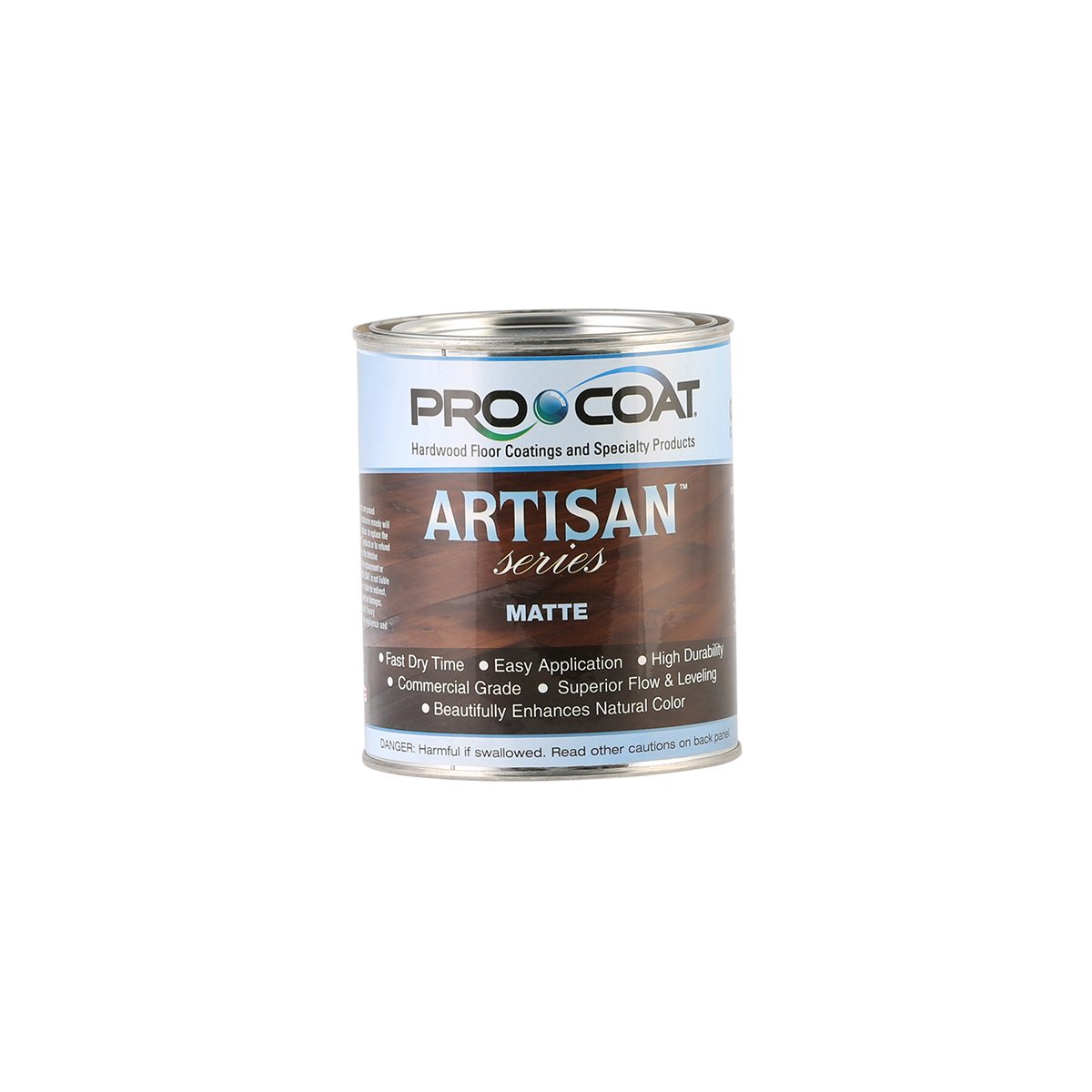
- Sheens available: Gloss, Semi-Gloss, Satin and Matte
- Coverage: about 500 sq ft per gallon
- Recoat window: 8 to 12 hours between coats
- Full cure: 28 days
- We apply two coats
- Applied by T-bar, roller or lambswool applicator
- Wear rating of 6 on the manufacturer's 1-10 scale, rated for residential, commercial and sport flooring
One practical note: the floor is walkable well before it's cured. Rugs and heavy furniture should wait out the full 28 days, since anything sitting on the surface before then can leave a mark or slow the cure underneath it.
Matte or satin — how to choose
Both sheens use the same polyurethane and hold up exactly the same. The choice is about how you want the room to look and how bright it is, not about durability.
Matte works well for: hiding scratches and dust between cleanings, a natural, modern look that reads as wood rather than as a coating, and dark stains, since gloss on a dark stain shows every mark and footprint while matte does not.
Satin works well for: a little extra light bounced into a room that doesn't get much natural light, a more traditional look, and as a safe middle-of-the-road choice if you're refinishing to sell and don't know the next owner's taste.
If you're still weighing it up, the fastest way to decide is to see both in your own house under your own light. Request a free estimate and we'll bring finish samples to the walkthrough.
Frequently Asked Questions
Does matte polyurethane scratch more easily than satin?
No. Scratch resistance comes from the polyurethane coating itself, not the sheen level, and matte and satin from the same product line wear the same way. If anything, matte tends to show existing scratches and dust less than a shinier sheen, because a low-sheen surface scatters light instead of reflecting it directly.
How long until I can walk on / put furniture back on a matte floor?
The floor is walkable well before the finish is fully cured. Rugs and heavy furniture should wait out the full 28-day cure period, since anything sitting on the surface before then can leave a mark or slow curing underneath it in that spot.
Can you put matte polyurethane over an existing finish?
Often, yes. An existing oil-based poly finish in sound condition can usually be screened and recoated with a fresh matte topcoat. Wax, water-based finishes, or floors with significant damage usually need a full sand first. We check which situation you're in as part of the free estimate before recommending either approach.
Does matte make a small room look darker?
Matte doesn't change the stain color itself, but because it reflects less light than satin, a small room with limited natural light can read slightly less bright. If a room already gets good natural light the difference is minor; if it's dim to begin with, satin's small amount of extra sheen bounces a little more light around.
How many coats of matte polyurethane do you apply?
Two coats, which is what the ProCoat Artisan Series finish we use is built around. Each coat needs 8 to 12 hours before the next goes on, and the full cure takes 28 days even though the floor is walkable well before that.
Ready to Get Started?
Schedule a free on-site estimate — we’ll assess your floors and give you an honest recommendation, not a sales pitch.
Project Photos
Request a Free Estimate
Tell us about your project and we'll get back to you with an estimate — usually the same business day.
Thanks — We'll Be In Touch
A member of The Hardwood Guys team will call or text you during business hours (Mon–Fri, 7AM–5PM) to schedule your free on-site estimate.